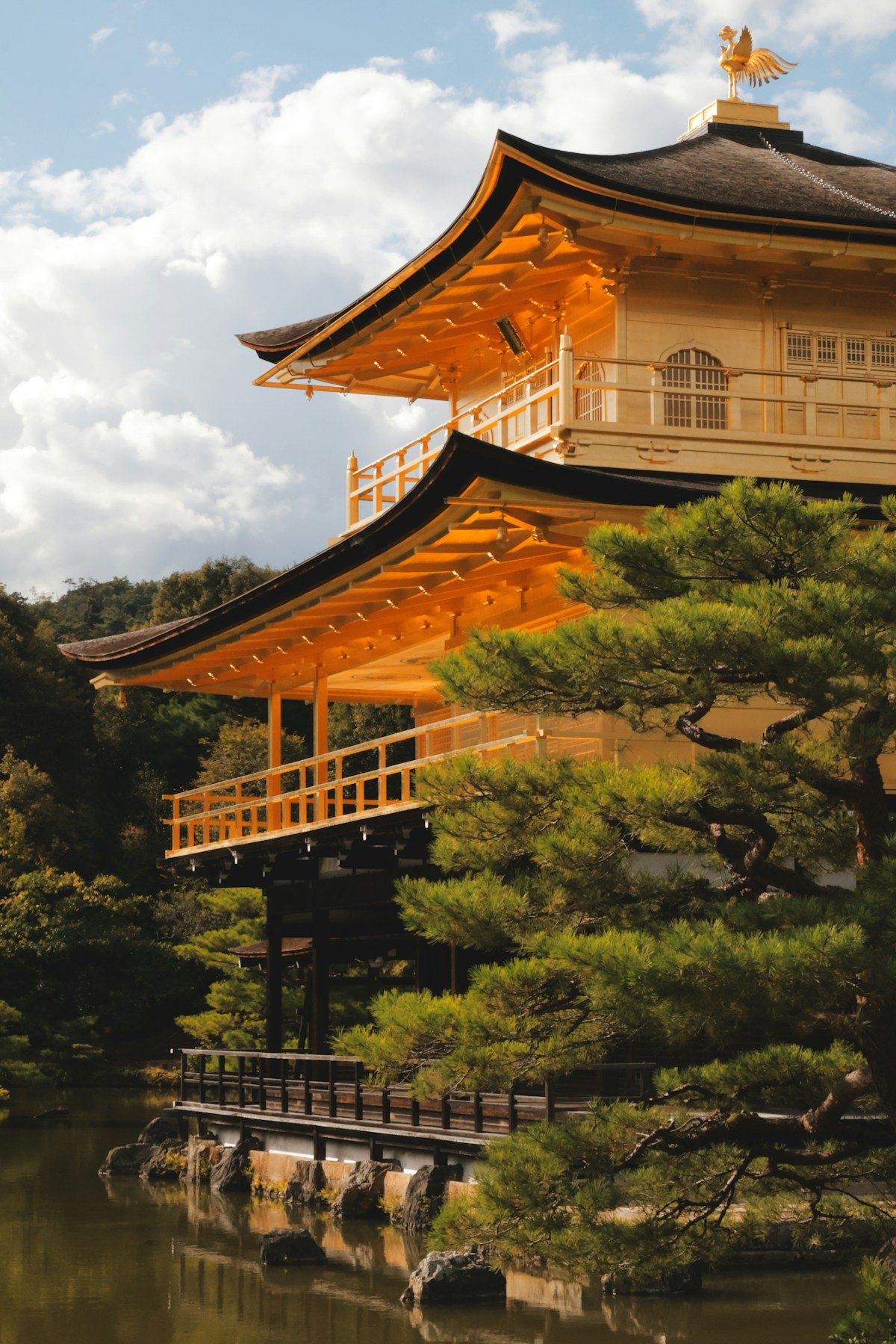
Kinkaku-ji is the most photographed building in Japan, and arguably the most immediately striking: a three-storey pavilion covered in gold leaf, floating above its reflection in Kyoko-chi (Mirror Pond). The image appears on countless postcards, yet standing in front of it - the gold against pine trees, the pond mirroring both - remains genuinely impressive. It requires admission and attracts large crowds, but timing your visit well makes the difference between a crowded walkthrough and a memorable one.
Top Tours at a Glance
Here’s a quick comparison of top-rated tours on GetYourGuide:
| Tour | Duration | Price (from) | Group Size | Highlights |
|---|---|---|---|---|
| Kinkaku-ji and Ryoanji morning walking tour | 4 hrs | from $48/person | Small group (max 10) | Both northwest Kyoto temples, English guide, early entry |
| Kyoto full-day highlights tour | 9 hrs | from $72/person | Group | Kinkaku-ji, Arashiyama, Fushimi Inari in one day |
| Kyoto temples private guided tour | 5 hrs | from $110/person | Private | Kinkaku-ji, Ninnaji, Daitoku-ji, flexible itinerary |
| Kinkaku-ji photography tour — early morning | 3 hrs | from $65/person | Small group (max 8) | First-entry timing, composition guidance, minimal crowds |
Browse all Kinkaku-ji tours → GetYourGuide
History of the Golden Pavilion
Originally built in 1397 as the retirement villa of shogun Ashikaga Yoshimitsu, the pavilion was converted into a Zen Buddhist temple (Rokuon-ji) after his death. The building burnt down in 1950 - deliberately set on fire by a young monk, an act that inspired Yukio Mishima’s 1956 novel The Temple of the Golden Pavilion. The present structure is a 1955 reconstruction; the gold leaf coating was extensively renewed in 1987 and again in 2020.
The surrounding garden (Rokuon-ji garden) was originally designed in the Muromachi period and is classified as a Special Historic Site and Special Place of Scenic Beauty - the highest dual designation in Japan.
Tickets and Entry Fee
- Adult admission: ¥500 (as of 2026)
- Students (elementary, junior high, senior high): ¥300 (as of 2026)
- Children under school age: free
Tickets are purchased at the gate on arrival. There is currently no advance online booking for standard entry; you pay at the booth on the day. Admission includes the garden circuit and the exterior view of the pavilion - visitors do not enter the building itself.
The ticket doubles as a unique souvenir: it’s a small paper slip with a gold print of the pavilion and a Buddhist prayer in calligraphy. Many visitors keep it.
Pre-booked guided tours (which include admission) are available through the booking widget above and typically skip the ticket queue.
Opening Hours
Kinkaku-ji is open daily:
- 9:00–17:00, every day including public holidays
Last admission is at 17:00. The garden closes promptly. There are no evening visits.
The Garden Circuit
Unlike most Kyoto temples with multiple structures to explore, Kinkaku-ji is a one-way garden circuit with the pavilion as the centrepiece. The route takes approximately 30–45 minutes. It proceeds:
- Entry gate → Kyoko-chi pond: The main postcard view. The path curves along the pond’s south edge, providing a series of classic compositions: pavilion reflected in still water, pine trees framing the gold structure.
- Anmintaku Pond: A smaller pond with a small stone island. The pond supposedly never overflows, according to temple legend.
- Sekkatei Teahouse: A thatched pavilion beside a stone lantern. One of the few spots in the circuit where visitors can pause - tea service is sometimes available for a separate fee (approximately ¥500–¥700 for matcha and sweets, as of 2026).
- Fudo-do Hall: A small hall containing a stone statue of Fudo Myo-o said to be carved by the monk Kobo Daishi. A separate incense-burning area allows visitors to make offerings.
- Exit through the souvenir area: The circuit ends at a covered walkway with stalls selling omamori (good luck charms), matcha powder, and small gold-leaf items.
Best Time to Visit
Opening time (9:00): Arriving at 9:00 places you in the first wave through the gate. The initial 20 minutes before later arrivals catch up offer the clearest views of the pond without bodies in frame.
Weekday mornings (9:00–10:30): Significantly quieter than weekends. Tour buses typically arrive after 10:00.
Winter: December and January see far fewer visitors than spring or autumn. A dusting of snow on the gold roof (rare in Kyoto but it does happen) is one of the most spectacular sights at the site.
Avoid: Spring (late March–late April), especially Golden Week (late April–early May), and autumn foliage season (mid-November) are the most crowded periods. On busy days the circuit slows to a crawl. Summer weekends are also dense.
How to Get There
Kinkaku-ji is in the northwest of Kyoto, away from the main tourist cluster. There’s no direct subway line.
By bus (most common):
- Bus 12, 59, 101, or 205 from Kyoto Station → Kinkakuji-michi stop (approximately 40 minutes, ¥260). The entrance is a 1-minute walk from the stop.
- Bus 12 or 59 from Shijo-Karasuma (city centre).
By taxi:
- From Kyoto Station: approximately ¥1,800–¥2,200, 15–20 minutes (without traffic). Traffic is often heavy on the route west from Karasuma; allow extra time.
From Arashiyama:
- Bus 11 runs between Ryoanji and Kinkakuji (Ryoanji is a natural combination day visit). Approximately 10 minutes.
From Ryoanji (rock garden temple): 1.4 km walk or 5-minute bus ride. Combining Ryoanji and Kinkaku-ji in one morning is very common and efficient.
What Else Is Nearby
Ryoanji Temple (1.4 km): Home to Japan’s most famous Zen rock garden - 15 stones arranged in a bed of raked gravel. Entry approximately ¥600, as of 2026. Best combined with Kinkaku-ji in the same morning.
Ninnaji Temple (2 km): A UNESCO-listed temple with a five-storey pagoda and garden of late-blooming cherry trees. Entry to the grounds is free; the inner precinct costs approximately ¥800.
Daitoku-ji (3 km south): A large Zen temple complex with several sub-temples, some rarely visited, offering a quieter experience than Kinkaku-ji.
Food and Drink
The area around Kinkaku-ji has limited restaurant options compared to central Kyoto. The most practical approach:
- Eat before visiting (the Karasuma/Shijo area has dense restaurant coverage).
- The exit shopping area at Kinkaku-ji has a small stall selling matcha soft-serve (approximately ¥500) and canned drinks.
- Ryoanji has a tea house beside the famous rock garden that serves matcha and rice cakes in a traditional setting, approximately ¥700.
Photography Tips
- Midday harsh light flattens the gold somewhat. Softer light in the morning or on overcast days gives a more even glow.
- The pavilion faces south; morning light is front-lit; afternoon light is side-lit from the west.
- The most classic composition is from the main viewing area straight off the gate - tight frame excluding people on either side, pavilion centred over its reflection.
- The second-best angle is from slightly further along the path as it curves east, showing more of the pine trees and less of the crowd.
FAQs
Can you go inside the Golden Pavilion? No. The pavilion itself is closed to the public; you view it from the garden path around the pond.
How long does a visit take? The circuit takes 30–45 minutes. Add time for the queue to enter on busy days.
Is Kinkaku-ji worth it? Yes - it’s one of those buildings that actually lives up to its reputation. The gold is genuinely striking in person, especially reflected in still water.
Is it accessible? The garden path is mostly flat and paved. Some areas have gravel; wheelchairs can navigate the main circuit with assistance.
Nearest city hub: Kyoto - where to stay, restaurants, and planning your time in Kyoto.