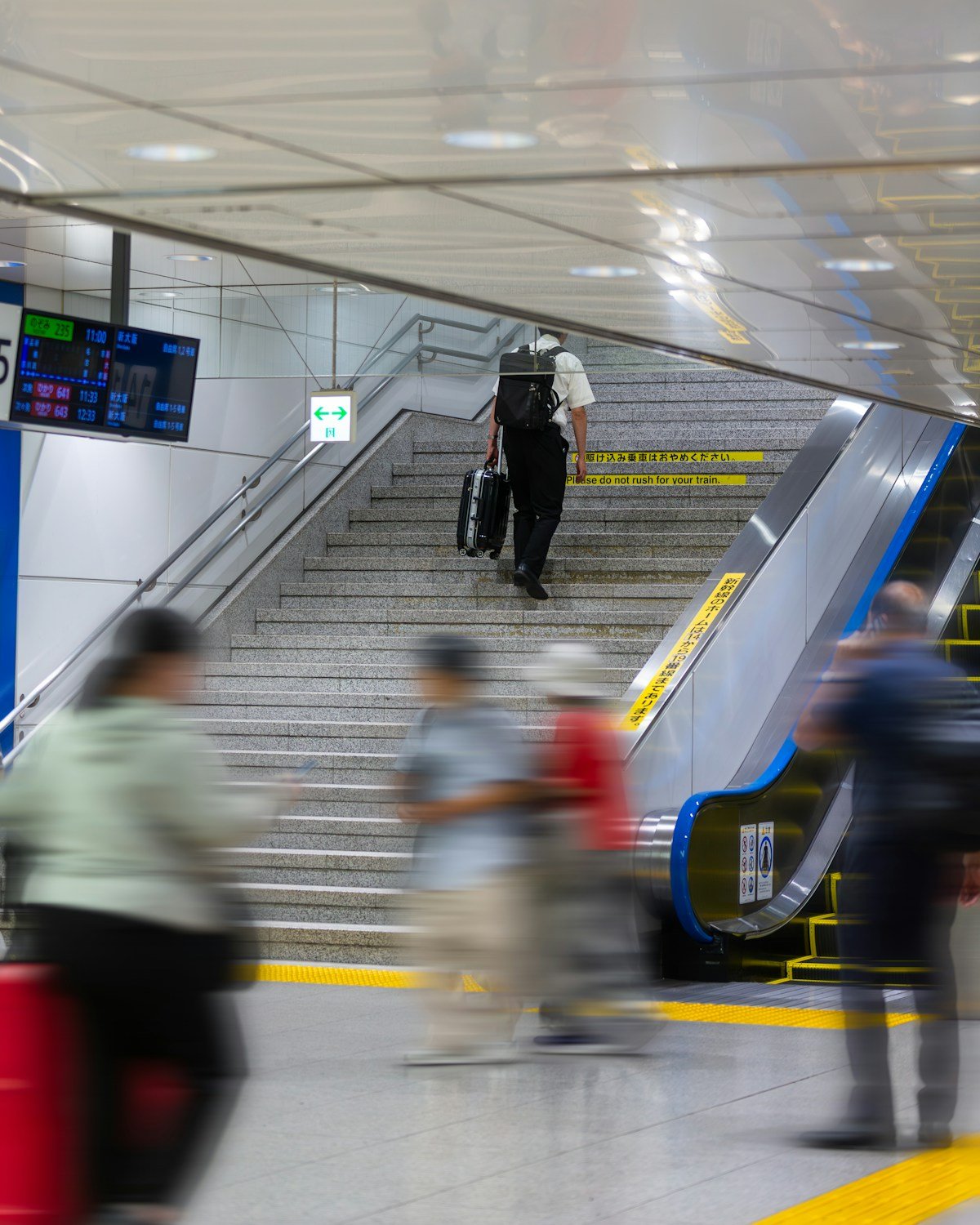
Dragging a heavy suitcase through Tokyo’s labyrinthine subway stations, up crowded escalators, and into packed shinkansen carriages is one of the easiest Japan travel mistakes to make. The solution is takkyubin (宅急便) - Japan’s luggage forwarding service - and once you use it, you will wonder how you managed without it.
See also: Luggage forwarding in Japan: full provider guide with prices · Getting around Japan
Send your bag from your hotel lobby on Monday morning. It arrives at your next hotel on Tuesday. You travel light, walk freely, and board every train without performing luggage Tetris. Here is how the system works and what it costs.
What Is Takkyubin?
Takkyubin literally means “home delivery express” and refers to Japan’s door-to-door parcel and luggage courier services. Two major carriers handle the bulk of tourist luggage:
Yamato Transport (ヤマト運輸), trading under the Kuroneko Yamato brand (black cat logo), is the most widely recognised and the most tourist-friendly. Its black-and-yellow cat logo appears on everything from convenience store counters to airport kiosks. Yamato’s English-language website and tracking system make it the default choice for international visitors.
Sagawa Express (佐川急便) is the other major player. Slightly smaller network presence in tourist contexts, but equally reliable and often a few hundred yen cheaper on longer routes. Both carry the same types of items - suitcases, backpacks, golf bags, ski equipment, and boxes.
How Much Does Takkyubin Cost?
Prices are calculated by the size of the bag (measured in total centimetres: length + width + height) and the distance between origin and destination prefectures. As of 2026, expect to pay approximately:
- Standard suitcase (60–80 cm total): ¥1,500–2,200 within the same region (e.g. Tokyo to Yokohama)
- Standard suitcase (60–80 cm total): ¥2,000–2,800 across regions (e.g. Tokyo to Osaka)
- Large suitcase (80–120 cm total): ¥2,500–3,500 for inter-region routes
- Ski bags / snowboard bags: ¥2,800–4,000+ depending on size and route
These are approximate figures as of 2026. Prices vary slightly between carriers and may differ based on exact dimensions and weight. Oversize items (over 160 cm total) attract a surcharge.
Weight limit: Most bags are accepted up to 30 kg. Bags over 30 kg may be refused or charged extra.
Tip: Yamato Transport’s English website has a fare calculator where you can enter origin prefecture, destination prefecture, and bag size to get an exact quote before you ship.
Where to Send Your Luggage From
Hotels
Most hotels and ryokan accept luggage for forwarding from the front desk. Hand your bag to reception the evening before you need to leave; they arrange collection by the courier. Some hotels have cut-off times (often 10–11am for same-day collection), so confirm the night before.
Budget hotels and hostels generally also offer this service. Check at check-in whether the reception can handle forwarding, or whether you need to find a nearby convenience store.
Convenience Stores (Konbini)
Japan’s convenience stores - 7-Eleven, FamilyMart, and Lawson - all serve as drop-off points for Yamato Transport. This is the most flexible option when you are already checked out of your hotel and need to ship before catching a train.
How it works:
- Ask the staff for a 宅急便 (takkyubin) form or use the in-store terminal (look for the Yamato logo on the screen).
- Fill in your destination address and phone number. Reception staff at Japanese hotels will write the destination address for you if you ask.
- Pay at the counter. The bag is collected from the store by the courier.
7-Eleven counters display the Yamato price list. FamilyMart and Lawson use Yamato or occasionally Sagawa depending on the store’s contract.
Airports: Arriving and Departing
Sending from the airport (for light travel): Both Narita and Haneda airports have luggage forwarding desks in the arrivals hall. Land in Japan, collect your suitcase, and immediately forward it to your first hotel before you even board the train into the city. You travel to Tokyo with just your carry-on.
- Narita Airport: Yamato Transport counters are in Terminals 1, 2, and 3. Open typically from 7am to 10pm. Bags forwarded before noon usually arrive the next day in Tokyo or the Kanto area; Osaka delivery is typically two days.
- Haneda Airport (International): Yamato and Nippon Express desks are in the arrivals hall. Similar hours and schedules.
- Kansai International Airport (Osaka): Yamato counters in Arrivals. Bags sent to Kyoto arrive the same evening if dropped before midday; bags for Tokyo arrive the following day.
Collecting at the airport before departure: You can also arrange for bags to arrive at the airport. This requires booking at least one day in advance. Specify the terminal and your departure date, and your bag will be waiting at the airport’s luggage storage counter on departure day. This is especially useful at the end of a trip when your hotel is in a different city to your departure airport.
Same-Day vs Next-Day Delivery
Next-day delivery is the standard and most affordable option. A bag dropped at a convenience store or hotel before noon in Tokyo will typically arrive in Osaka the following morning. Same-region deliveries (e.g. Tokyo → Yokohama) can arrive within a few hours.
Same-day delivery is available on some routes via Yamato’s Cool TA-Q-BIN express service (primarily for perishable goods) or via courier contracts, but it is significantly more expensive and not generally practical for tourist luggage.
Delivery time windows: Yamato lets you choose a delivery time slot - morning (8–12), afternoon (12–14), or evening (16–18, 18–20, 20–21). Specify a window that suits your hotel check-in time. This is bookable online or on the paper form.
Tracking: Yamato’s English website tracks bags by the 12-digit slip number printed on your receipt. You will get an email notification (if you provide an address) when the bag is collected and again when it is out for delivery.
Ski and Snowboard Equipment Forwarding
This is where takkyubin becomes genuinely life-changing for ski travellers. Carrying ski bags on the shinkansen and buses to Niseko, Hakuba, or Nozawa Onsen is not pleasant - the bags are large, trains are busy, and overhead racks are not designed for skis.
Ski forwarding is completely standard. Yamato and Sagawa both accept ski bags, snowboard bags, and boot bags. Most ski resorts and resort hotels in Hakuba, Niseko, Myoko, and Nozawa Onsen have Yamato counters or accept forwarding from the front desk.
- Ski bag (2 pairs of skis + poles): approximately ¥2,800–3,500 Tokyo to Nagano or Niigata as of 2026
- Snowboard bag: approximately ¥2,500–3,200 on the same routes as of 2026
- Boot bag: treated as a standard large suitcase, approximately ¥2,000–2,800
Winter timing note: Book in advance during peak ski season (December to March). Yamato can get booked up around public holidays (Obon, Golden Week, New Year). Hotels in ski resorts will arrange collection - just confirm one or two days ahead, not the morning of departure.
Airport Limousine Luggage Service
For travellers who want maximum convenience arriving or departing, several airport companies offer a combined transfer-and-delivery package. Delivery Service Japan and JAL ABC (at Narita and Haneda) offer same-day or next-day delivery to city hotels for approximately ¥2,500–3,500 per bag as of 2026, which is slightly above standard takkyubin rates but includes more handling support.
These services are booked at the airport service counters near arrivals rather than at the Yamato desk.
Tips for Using Takkyubin
Label your bag clearly. Attach a note with your destination hotel’s address in Japanese (ask your hotel to email you the Japanese address) and your Japanese phone number. Many travellers use a SIM card or eSIM - the number on that SIM should be on the label.
Ask your hotel to write the recipient address. Reception staff at Japanese hotels can fill in the delivery address correctly in Japanese, avoiding any confusion at the courier depot.
Never ship valuables. Passports, cash, credit cards, and electronics should stay with you. Yamato’s liability for lost or damaged bags is limited to approximately ¥30,000 unless you declare a higher value and pay a surcharge.
Plan around delivery timing. If you check out on Wednesday morning and check into your next hotel on Thursday, send the bag Wednesday morning for Thursday delivery. If you check in on Wednesday evening, confirm with the hotel whether they can accept a delivery while you are not yet present (most can).
Non-deliverable items: Liquids over one litre, fresh food without cooling, batteries over a certain size, and items classified as dangerous goods are not accepted. Standard toiletries and medication in normal quantities are fine.
Plan Your Trip
- Flights - Find the best fares to Japan
- Hotels - Search hotels in Japan on Booking.com
- Travel Insurance - Get covered before you go
- eSIM - Stay connected from landing
- Car Rental - Compare prices across providers
- Tours and activities - Browse experiences on GetYourGuide
Frequently Asked Questions
How far in advance do I need to book? No booking required for standard deliveries. Drop the bag, fill out the form, pay, and it goes. Booking a specific delivery window (e.g. 12–14) is free and recommended so the hotel knows to expect it.
Can I forward luggage between cities on the same day? Most Tokyo-to-Osaka forwarding is next-day. Same-day on that route is not reliably available through standard takkyubin. Plan your itinerary so bags travel overnight while you travel on the shinkansen.
What if my hotel cannot accept early delivery? Some smaller hotels and hostels will not accept bags before check-in time. Confirm this when you book. Larger hotels almost always hold forwarded bags in storage.
Can I use takkyubin for boxes or shopping purchases? Yes. Buying pottery in Kyoto or whisky in Tokyo and shipping it home? Yamato and Sagawa both offer international shipping through separate services (Yamato Global Express). Rates vary by destination country.
Is takkyubin available in English? Yamato’s website and the in-store terminals at major convenience stores have English interfaces. Filling in the paper form requires some Japanese for the address lines - reception staff at any hotel can help.
What is the maximum bag size? Total dimensions (length + width + height) must be under 200 cm. Maximum weight is 30 kg for most standard services.