Okinawa’s main island is large enough to fill a week on its own, but the prefecture covers 160 islands spread across 1,000 kilometres of ocean. The outer islands - with their shallow-draft reefs, fishing traditions, and slower pace - are genuinely different from Naha, and several are reachable within a day. Here are the best day trips from Okinawa, from 20-minute drives to hour-long ferry crossings.
Zamami Island (Kerama Islands)
Zamami is the most rewarding day trip for most visitors, and the logistics are straightforward. High-speed ferries (Queen Zamami) depart from Tomari Port in Naha - approximately 15 minutes by taxi from Kokusai-dori - and reach Zamami Village in approximately 50 minutes. One-way fare is approximately ¥3,200 as of 2026; round-trip approximately ¥6,400.
The first morning departure is typically at 9:00am; the last return from Zamami leaves around 4:00–5:00pm depending on the season. Check the Zamami-son ferry schedule online before travelling, as departures are reduced outside summer. In July and August, ferries fill up - book several days ahead.
Furuzamami Beach, a short walk from the port, is consistently ranked among Japan’s top beaches. The water is turquoise and shallow for the first 100 metres, transitioning to coral reef beyond the drop-off. Snorkelling equipment is available for rent directly on the beach from approximately ¥1,500. Sea turtles are frequently spotted here - they feed on seagrass in the shallows and are accustomed to human presence, though swimmers are asked not to approach them.
Between December and April, humpback whales pass through the Kerama Strait on their migration route. Whale-watching boat tours depart from Zamami Village during this period, costing approximately ¥5,000 per person for a 2–3 hour trip. The Kerama Strait is considered one of the best whale-watching locations in Japan due to the shallow, clear water that allows surface-level sightings.
If you prefer to stay overnight, accommodation on Zamami starts from approximately ¥8,000 per person including dinner and breakfast at a minshuku guesthouse. The island has no large hotels, which keeps the atmosphere quiet even in summer.
Tokashiki Island (Kerama Islands)
Tokashiki is the largest island in the Kerama group and closer to Naha - approximately 35 minutes by high-speed ferry from Tomari Port, with a one-way fare of approximately ¥2,600 as of 2026 (round-trip approximately ¥5,200). The Marine Liner Tokashiki operates the route; check schedules at Tomari Port or online.
The island is significantly less crowded than Zamami, which appeals to those who want the same coral-reef quality with fewer day-tripping visitors. Aharen Beach on the island’s western side is the main attraction - long, white sand, clear water, and coral close to shore. Tokashiku Beach to the north is larger and even more sheltered.
Tokashiki is spread out enough that a rental scooter is the best way to cover it in a day. Scooters rent from approximately ¥2,000–¥3,000 per day at the port, bicycles from approximately ¥1,000. The hilly interior offers views back over the Kerama Strait toward Zamami and the main island.
Churaumi Aquarium and Ocean Expo Park
Churaumi Aquarium (officially Okinawa Churaumi Aquarium, part of Ocean Expo Park) is in Motobu-cho in northern Okinawa, approximately 2 hours from Naha by expressway bus or 90 minutes by car. It requires a full day to combine with the surrounding park.
The centrepiece is the Kuroshio Tank - one of the largest aquarium tanks in the world at 7,500 cubic metres. It holds three whale sharks (the largest fish species), multiple manta rays, and several large schools of fish including the Japanese anchovy and bump-head parrotfish. The viewing panel is 8.2 metres high and 22.5 metres wide, wide enough that visitors often sit in front of it for extended periods. Entry is approximately ¥2,180 for adults as of 2026; children approximately ¥1,440.
Ocean Expo Park, which surrounds the aquarium, is entirely free to enter and considerably expands a day here. It contains a reconstructed traditional Ryukyuan village with craftspeople demonstrating pottery, weaving, and traditional architecture; the Okinawa Tropical Dream Center (an orchid and tropical plant greenhouse, approximately ¥760 entry); and a dolphin show pool with daily timed performances at no extra charge.
Adjacent to Ocean Expo Park, Nakijin Castle (Nakijin-jo Ruins) is approximately 10 minutes by car and makes a natural add-on. The castle was built in the 13th or 14th century as the seat of the northern Ryukyuan kingdom and is now a UNESCO World Heritage Site. Entry is approximately ¥600. The limestone walls curve across the hillside in a way that is more visually striking than the more-visited Shuri Castle in Naha, and it is significantly less crowded.
The easiest public transport option from Naha to Churaumi is the Yanbaru Express Bus (operated by Okinawa Bus and Ryukyu Bus jointly), which runs directly from Naha Bus Terminal to Ocean Expo Park in approximately 2 hours. Return fares are approximately ¥2,000. Depart on the first morning bus (check schedule at Naha Bus Terminal or online) to maximise time at the park.
Cape Manzamo and the Central Coast
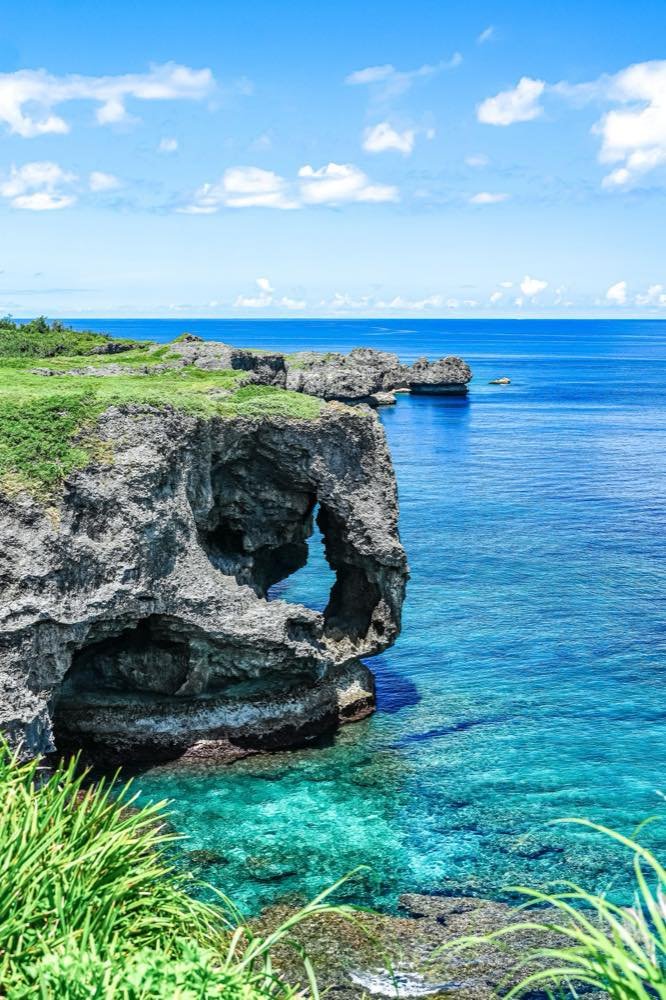
Cape Manzamo is a basalt cliff formation on the central-west coast of the main island, approximately 40 minutes from Naha by car or taxi. The distinctive formation - the rocks curve into a shape that Okinawans have compared to an elephant’s trunk extending into the sea - sits above crashing surf on the East China Sea side. Entry is free; parking costs approximately ¥300. The viewing area is compact and takes 20–30 minutes, making it better as part of a wider loop than as a standalone destination.
The most logical combination adds two further stops. Ryukyu Mura is a traditional Okinawan village experience approximately 10 minutes south of Cape Manzamo along Route 58, with reconstructed old Okinawan houses, cultural performances including the Eisa drum dance, and traditional craft demonstrations. Entry is approximately ¥1,500 for adults.
The American Village in Chatan, approximately 20 minutes south of Ryukyu Mura, is a somewhat incongruous commercial district built on reclaimed land that once formed part of a US military base. It has a Ferris wheel, a beach, and a dense cluster of restaurants, cafes, and shops. The architecture is self-consciously American-retro. It works as a lunch stop - several taco rice restaurants operate here - before heading back to Naha.
Southern Okinawa War Sites
The southern part of the main island contains the most significant sites connected to the Battle of Okinawa (April–June 1945), one of the bloodiest engagements of the Pacific War. A half-day trip from Naha covers the key locations.
Himeyuri Peace Museum in Itoman (approximately 40 minutes by bus from Naha Bus Terminal) documents the story of the Himeyuri Student Corps - approximately 240 female high school students and their teachers mobilised as field nurses and support workers in US Army field hospitals during the battle. Most died in the final weeks of fighting, primarily when the caves where they were sheltering were sealed or bombed. The museum is quietly presented and difficult to leave quickly. Entry is approximately ¥310.
Okinawa Peace Memorial Park, a few kilometres east of Himeyuri, is free to enter and contains the Cornerstone of Peace - a series of granite tablets inscribed with the names of all 240,000 people (military and civilian, from all nations involved) who died in the battle. The adjacent Okinawa Prefectural Peace Memorial Museum (entry approximately ¥300) provides broader historical context.
Gyokusendo Cave in the same southern district is a stalactite cave system with 890 metres of walkable passages. Entry is approximately ¥1,240 and includes access to Kingdom Village, a reconstructed traditional Okinawan settlement above ground with craft shops and a habu (pit viper) exhibition.
Itoman Fishing Port
Itoman, approximately 20 minutes from Naha by car or taxi, is the largest fishing port in Okinawa and one of the most active in southern Japan. The morning hours (6:00–10:00am) are when the overnight catch comes in and the port is busiest. Several seafood restaurants in the immediate area specialise in the catch of the day - sashimi platters from approximately ¥1,500, grilled fish sets from approximately ¥1,200.
Itoman lacks tourist infrastructure, which is the point. The covered fish market adjacent to the port sells whole fish to local restaurants and households. The town itself has a quiet, working-port character distinct from the resort areas further north.
Make the most of your time around Okinawa: Guided day trips from Okinawa handle the logistics - transport, guide, and timing - so you can focus on the experience. For airport arrivals and departures, Kiwitaxi offers fixed-price airport transfers with no meter surprises.
Getting Around: Car vs Bus
Renting a car in Japan from Naha (¥5,000–¥8,000 per day for a compact vehicle as of 2026) is the most flexible option for reaching sites on the main island. International Driving Permits from most countries are accepted. Traffic around Naha can be heavy during morning and evening rush hours, but the expressway (Route 58 and Okinawa Expressway) moves quickly outside those windows. Most car rental companies in Naha have offices near Naha Airport or in the Tomishiro/Oroku area - shuttle buses from the airport terminal are standard.
Public buses cover the main tourist routes but require more planning. IC cards (Suica, Pasmo) do not work on Okinawa’s local bus network - buy tickets on board with cash, or purchase a day pass from Naha Bus Terminal (approximately ¥800 for unlimited same-day travel within the Naha urban zone). The Yanbaru Express Bus to Churaumi is the most useful long-distance route for visitors without a car.
For the Kerama Islands, ferries are the only option. Departures are from Tomari Port in Naha, a short taxi or monorail ride from central Naha. The Zamami ferry (Queen Zamami Co.) and Tokashiki ferry (Marine Liner Tokashiki) have separate booking systems - check each operator’s website directly and book ahead in July and August.
For accommodation and planning your time in Naha, see our full Okinawa guide and where to stay in Okinawa.
Where to stay: Search hotels in Okinawa on Booking.com
See also: Okinawa travel guide · Things to do in Okinawa · Where to stay in Okinawa · Hokkaido vs Okinawa · Okinawa region guide · Best time to visit Japan