Naha & Okinawa Main Island: Shuri Castle, Beaches & Awamori
Naha city guide: Shuri Castle ¥400, Kokusai-dori food street, Naminoue Beach, awamori distilleries, and practical tips for Okinawa's main island.
Guides for Okinawa
Okinawa is the southernmost prefecture of Japan, comprising approximately 160 islands scattered across 1,000 kilometres of the East China Sea and Pacific Ocean. The main island - also called Okinawa - holds 1.47 million of the prefecture’s 1.5 million people. The subtropical climate (average annual temperature 23°C), the distinct Ryukyu Kingdom culture that predates Japanese annexation by centuries, and the coral reefs and beaches of the Kerama and Yaeyama island chains combine to make Okinawa a genuinely different Japan from the mainland cities.
The prefecture was not always part of Japan. The Ryukyu Kingdom governed the islands as an independent state from 1429 until 1879, when the Meiji government annexed the territory - a process the Okinawan people experienced as an occupation. The islands were then the site of the bloodiest campaign in the Pacific War: the Battle of Okinawa in 1945 killed an estimated 94,000 civilian residents (roughly one-third of the population), alongside 12,000 American troops and 110,000 Japanese soldiers. The US occupied the islands until 1972, and today 70 percent of all US military bases in Japan are concentrated in Okinawa, covering approximately 15 percent of the main island’s surface.
This layered history - Ryukyu independence, violent incorporation into Japan, US occupation, and current military presence - shapes Okinawan culture in ways that distinguish it sharply from the rest of Japan.
Naha City
Naha is the prefectural capital, home to 332,000 people, and the first port of call for visitors arriving by air. The Naha Airport monorail (Yui Rail) connects the terminal to the city in 12 minutes and is the only rail transit on the main island.
Kokusaidori (International Street) is Naha’s main commercial strip - a 1.6-kilometre boulevard of shops, restaurants, and bars that serves both locals and tourists. It is genuinely animated rather than purely tourist-oriented, with Orion beer signs in almost every window, Okinawan souvenir shops selling shisa lion-dog pottery (¥800–¥5,000), and a concentration of restaurants serving champuru stir-fry and Okinawa soba. The Makishi Public Market, set back off Kokusaidori, has two floors: the ground floor sells fresh seafood (including tropical fish, sea turtle products, and large shellfish), and the second floor has small restaurants that cook whatever you purchase downstairs for a ¥300–¥500 preparation fee.
Shuri Castle (¥820), a UNESCO World Heritage Site, was the ceremonial and administrative centre of the Ryukyu Kingdom from the 15th century. The main hall (Seiden) was destroyed by fire in October 2019 and is currently being reconstructed, with completion planned for approximately 2026. The outer castle complex - Nantanden, Kofukumon, and the surrounding gardens - remains fully accessible and provides context for the scale and sophistication of the Ryukyu court. The exhibition hall within the complex displays artefacts from the original structure and documents the history of the castle’s previous destructions and reconstructions (it was also destroyed in 1945 and rebuilt in 1992).
Beaches
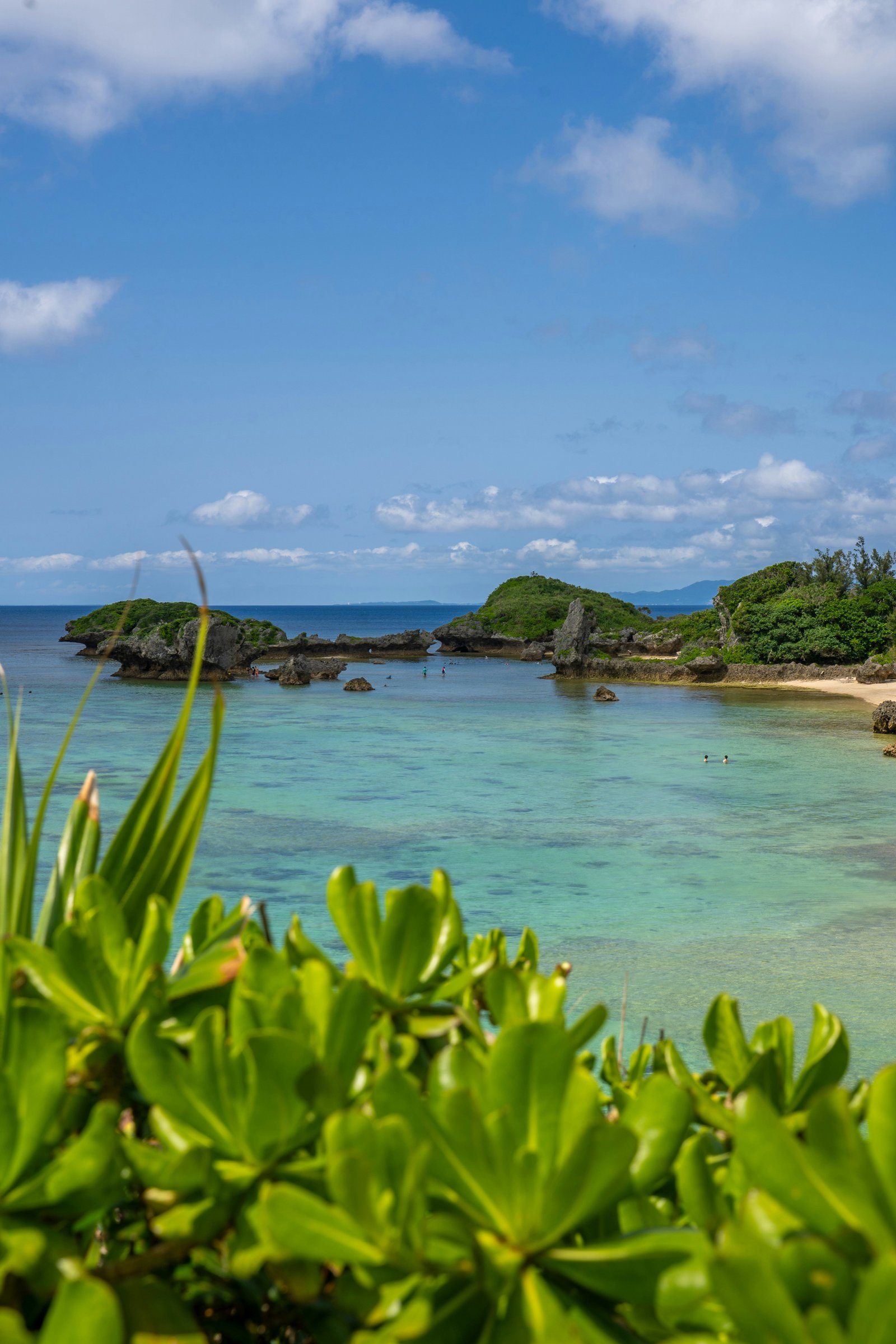
Okinawa’s beaches vary considerably. The west coast generally has calmer water and better sunset views; the east coast has rougher Pacific surf. The Kerama Islands have the best coral reef snorkelling accessible as a day trip.
Emerald Beach (free) is located within Ocean Expo Park near the Churaumi Aquarium in Motobu, approximately 2 hours by bus from Naha (¥1,980). The water is the most intensely blue of any beach on the main island, with fine white sand and some coral accessible from the shore.
Sun Marina Beach (free) in Chatan is the most convenient beach to Naha (20 minutes by bus), located adjacent to the American Village shopping complex. The beach is popular with both Japanese families and US military personnel from the adjacent bases.
Nirai Beach (¥500 entry) south of Naha on the Itoman coast has calmer water and is less crowded than the northern beaches. The entrance fee keeps numbers manageable. Snorkelling equipment can be rented onsite.
Ryukyu Food Culture
Okinawan cuisine is distinct from mainland Japanese food in ingredients, technique, and philosophical approach. The Okinawan diet has been the subject of longevity research since the 1980s - the island historically had some of the highest concentrations of centenarians in the world, a pattern researchers attributed partly to diet.
Goya champuru is the defining dish: bitter melon (goya) stir-fried with tofu, eggs, and pork, seasoned with soy and miso. The bitterness of the melon is not masked - it is the point of the dish. Available at most restaurants on the island for ¥700–¥1,000.
Okinawa soba is not made with buckwheat (despite the name) but with thick wheat noodles in a bonito and pork bone broth, topped with braised pork belly (rafute) and a thin curl of processed fish cake. It is satisfying, relatively mild, and costs ¥700–¥900 at soba shops throughout the island.
Awamori is the local distilled spirit, produced from long-grain Thai rice using a black mould fermentation technique unique to Okinawa. It is stronger than sake (typically 30–43 percent alcohol) and aged in traditional earthenware pots. At izakaya, a glass of standard awamori costs ¥400–¥600.
Orion Beer is the local lager brewed in Nago city in northern Okinawa. It is lighter and slightly sweeter than mainland Japanese lagers, well-suited to the subtropical climate. A can at a convenience store costs ¥200; a glass at an izakaya is ¥450.
Blue Seal Ice Cream is an Okinawa institution - an American-style ice cream chain established on the island during the US occupation period. Beni-imo (purple sweet potato) and salt cookie flavours are the most locally specific options. A single scoop costs ¥350.
Kerama Islands
The Kerama Islands lie 40 kilometres west of Naha and are accessible by high-speed ferry from Tomarin Port (30–35 minutes to Zamami, ¥2,530; 35 minutes to Tokashiki, ¥3,060). Ferries run twice daily in summer, once daily off-peak - check schedules before planning.
The Kerama Islands are designated a Kerama Blue Marine Park for the exceptional water clarity. Coral reefs begin within 100 metres of most beaches and are accessible without a boat. Snorkelling gear rental at Zamami costs around ¥2,000 for the day.
From February to April, humpback whales use the Kerama waters as a breeding and calving ground. Whale watching boat tours (¥5,000–¥8,000) depart from both Zamami and Naha’s Tomarin Port. Sightings during the peak season (mid-February to mid-March) are almost guaranteed.
Sea turtles nest on Zamami’s beaches from May to September. The nesting sites are marked and access is restricted at night, but turtles can be seen in the water by snorkellers throughout summer.
US Military Presence
The Chatan American Village (free to visit) is a shopping and entertainment complex built on former military land, deliberately styled with American architectural references - diners, burger joints, and a Ferris wheel. It has become a genuinely popular leisure destination for both Okinawan residents and visitors, and provides an interesting lens on the ongoing US-Japan military relationship played out in commercial form.
For a more direct engagement with the military history, the Peace Memorial Park at Itoman (free park, ¥300 for the prayer hall) displays 240,000 names - all those who died in the Battle of Okinawa, regardless of nationality - engraved on marble panels arranged around an eternal flame. The scale of the memorial is sobering and the site is one of the most significant WWII memorials in Asia.
Getting to Okinawa
All access from mainland Japan is by air. Naha Airport receives direct flights from Tokyo Haneda (2 hours 20 minutes), Tokyo Narita (2 hours 30 minutes), Osaka Kansai (1 hour 50 minutes), and Fukuoka (1 hour 10 minutes). Budget carriers Peach Aviation and Jetstar Japan serve these routes from ¥5,000 to ¥15,000 depending on season and booking lead time. Full-service carriers (ANA, JAL) typically cost ¥15,000 to ¥35,000 but include checked baggage.
From Naha Airport, the Yui Rail monorail connects directly to Naha city (¥260 to Kencho-mae near Kokusaidori). For travel beyond Naha, rental car companies have offices immediately outside the arrivals hall - booking in advance through Japanese aggregators is significantly cheaper than counter rates.
Once you are in town, our guide to getting around Okinawa covers the monorail, buses and car hire in more detail.
Naha hosts a giant tug-of-war each October. See our Naha Great Tug-of-War Festival event guide for dates and viewing tips.
Okinawa vs Hokkaido
Japan’s two island extremes: tropical south versus sub-arctic north. Our Hokkaido vs Okinawa comparison covers beaches, wildlife, food, and season - helping you decide which island fits your trip.
For a broader overview of Okinawa Prefecture and its outer islands, see our Okinawa region guide.
Planning your trip to Okinawa? Tours and activities in Okinawa cover guided experiences, cultural immersion, and the top sights with local expertise. Flights to Japan vary significantly by season - compare early to secure the best fares. Sort out travel insurance for Japan before you book, and pick up an Airalo eSIM for Japan to have mobile data the moment you land.
Search hotels in Okinawa on Booking.com
Explore Okinawa
Things to do in Okinawa · Where to stay in Okinawa · Best restaurants in Okinawa · Okinawa food guide · Day trips from Okinawa · Getting around Okinawa
Official sources worth checking before you go: Japan National Tourism Organization, Ministry of the Environment national parks pages.
See also: Okinawa region guide · Hokkaido vs Okinawa · Japan in July · Japan in August · Japan in September · Budget travel guide Japan · Long stay in Okinawa
Upcoming Events in Okinawa
Hatsumode - New Year Shrine Visits
Hatsumode 2027, 1–3 January. Japan's most important annual tradition - millions visit shrines and temples in the first three days of the new year.
Frequently Asked Questions
- How do you get to Okinawa from Tokyo?
- Okinawa is only accessible by air from mainland Japan. Flights from Tokyo Haneda or Narita to Naha take around 2 hours 30 minutes. Budget carriers Peach and Jetstar serve the route from ¥5,000 to ¥15,000. Full-service carriers (ANA, JAL) cost ¥15,000 to ¥35,000 but include baggage.
- Do you need a rental car in Okinawa?
- Outside Naha city, yes - a rental car is essentially required. Buses connect the main sights but run infrequently and require long waits. Car rental costs from ¥4,000 per day. Drive on the left, as in mainland Japan.
- What is awamori?
- Awamori is Okinawa's traditional distilled spirit, made from long-grain Thai rice using a black mould fermentation unique to the region. Unlike sake (brewed) or shochu (mainland distilled spirit), awamori is typically 30 to 43 percent alcohol and aged in earthenware pots. It is the defining drink of Ryukyu food culture.
- Is Okinawa safe for swimming and snorkelling?
- Generally yes. The Kerama Islands have exceptional coral reef and water clarity. Box jellyfish are present from May to October - most beaches have nets and provide vinegar for stings. Check conditions before entering the water. Sea snakes are present but not aggressive.
- When is the best time to visit Okinawa for beaches?
- June to October for warmest water temperatures (28–30°C). May to August for the calmest conditions. Typhoon risk runs August to September - check forecasts before booking. The shoulder months of April to May and October to November offer warm weather with fewer typhoons and smaller crowds.
Book an experience
Top experiences in Okinawa
Explore the best tours and activities in Okinawa, with instant confirmation and free cancellation on most bookings.