Okinawa divides naturally into Naha city activities and experiences that require getting out of the city by car or ferry. For the beaches, reefs, and most water-based activities, a rental car or ferry trip is necessary. For history, food, and cultural experiences, Naha is walkable and well served by the Yui Rail monorail. These 16 activities cover both.
1. Shuri Castle
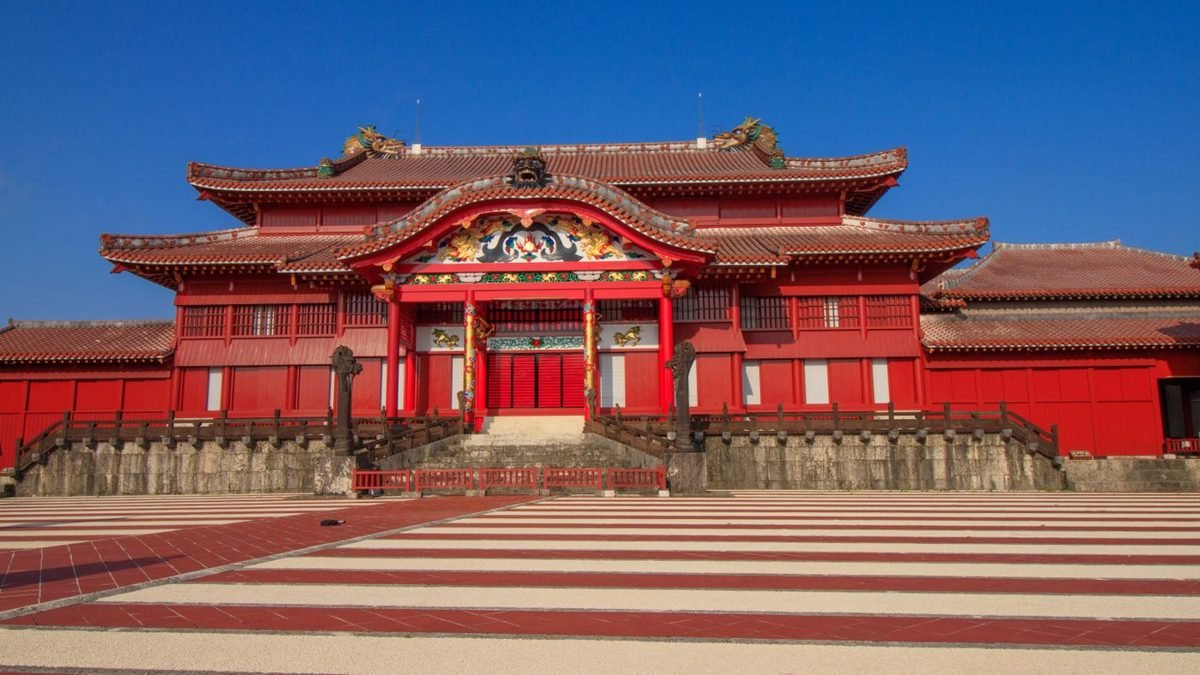
Shuri Castle (¥820, open 8am–6pm most of the year, 8am–8pm in summer) is the most significant surviving monument of the Ryukyu Kingdom. The main hall (Seiden) burned down in October 2019 - a catastrophic loss, since the hall was the ceremonial heart of the palace complex - and reconstruction is ongoing with an estimated completion in 2026.
The outer castle complex remains fully accessible and is worth visiting in the interim. The Nantanden (central hall), Kofukumon (main gate to the outer compound), and the extensive stone walls demonstrate the distinctive Ryukyu architectural style - lower, more horizontal than Japanese mainland castles, with Chinese-influenced decorative elements. The exhibition hall within the reconstructed Nanden building displays artefacts recovered from the 2019 fire and explains the castle’s history of destruction and rebuilding (it was also destroyed in 1945 during the Battle of Okinawa and rebuilt between 1958 and 1992).
Allow 1 to 2 hours. Take the Yui Rail to Shuri Station (¥280 from Kencho-mae) and walk 15 minutes uphill to the castle entrance.
2. Kokusaidori Street and Makishi Market
Kokusaidori (International Street) is 1.6 kilometres of shops, restaurants, and izakaya running from Kencho-mae monorail station toward the Tomarin Port area. It is genuinely active rather than purely tourist-facing - Okinawans shop and eat here alongside visitors.
The primary draw for visitors is the Makishi Public Market (open 8am–8pm, stalls close earlier). The ground floor is a traditional wet market selling fresh fish, tropical produce, and - unusually for Japan - some products specific to Okinawan diet that are difficult to find elsewhere. The second floor has a cluster of small restaurants that will cook whatever you purchase downstairs for a ¥300–¥500 preparation fee. Bring fresh fish upstairs, specify how you want it cooked (grilled, fried, sashimi), and the result arrives within 10 minutes. Budget ¥1,500–¥2,500 for a meal this way.
3. Kerama Islands Snorkelling
The Kerama Islands are the primary reef snorkelling destination accessible from Naha. High-speed ferries from Tomarin Port serve Zamami Island (30 minutes, ¥2,530 return) and Tokashiki Island (35 minutes, ¥3,060 return) twice daily in summer. The Kerama Tsuyu “Kerama Blue” - a specific shade of turquoise produced by the clarity of the water and the white sand below - is famous enough to have given the Kerama Marine Protected Area its formal designation.
Snorkelling directly from the beach at Furuzamami Beach on Zamami Island accesses live coral within 50 metres of shore. Equipment rental costs around ¥2,000. Sea turtles are reliably sighted feeding on the seagrass beds near the beach from May through September. Manta rays are less predictable but present in the deeper water around the island channel.
The ferries are booked in advance during the July and August holiday peak - reserve ahead if visiting during these months.
4. Churaumi Aquarium, Motobu
The Okinawa Churaumi Aquarium (¥2,180, open 8:30am–6:30pm, closed the first Wednesday in December) is one of the largest aquariums in the world and holds three whale sharks in a tank measuring 35 metres by 27 metres by 10 metres deep. The whale sharks - the largest fish species - are displayed alongside thousands of reef fish in a single vast illuminated tank visible from multiple levels.
The adjacent Ocean Expo Park (free) contains botanical gardens, a traditional Okinawan village, and outdoor dolphin and manatee viewing areas (included with aquarium ticket, or free from park side). Allow at least 3 hours for the aquarium and an hour for the park. The park is located in Motobu in northern Okinawa - approximately 2 hours by express bus from Naha (¥1,980 each way) or 90 minutes by car via the expressway.
5. Nakagusuku Castle Ruins
Nakagusuku Castle (¥400, open 9am–6pm) is one of the five Ryukyu Gusuku ruins listed as UNESCO World Heritage Sites. Unlike Shuri, which has been substantially reconstructed, Nakagusuku is pure ruin - massive dry-laid limestone walls following the ridgeline of a hill with no reconstruction beyond basic conservation. The views from the castle walls are exceptional: on clear days, both the Pacific Ocean (east) and the East China Sea (west) are visible simultaneously.
The castle dates from the early 15th century and was a significant military stronghold before the consolidation of the Ryukyu Kingdom. Allow 45 minutes to 1 hour. A rental car is the most practical access; alternatively, a bus to nearby Kitanakagusuku and a taxi up the hill costs around ¥1,500.
6. Okinawa Peace Memorial Park
The Peace Memorial Park at Itoman (free park, ¥300 for the Cornerstone of Peace exhibition hall) is one of the most significant WWII memorials in Asia and the most emotionally affecting site in Okinawa. The park occupies the Mabuni Hill area where the final resistance of Japanese forces ended on June 22, 1945, following 82 days of the bloodiest campaign in the Pacific War.
The Cornerstone of Peace consists of black granite panels engraved with 240,000 names - all those who died in the battle and the surrounding campaign, regardless of nationality, military branch, or which side they were on. The panels are arranged in arcs around an eternal flame and face the sea. Japanese soldiers, American soldiers, and the approximately 94,000 Okinawan civilians who died are listed together.
The Peace Memorial Museum (¥300) presents the civilian experience of the battle in extensive detail. Allow 2 hours for the park and museum combined. This is essential context for understanding Okinawa as it is today.
7. Whale Watching in Kerama (February to April)
From late January to late March, humpback whales gather in the Kerama Strait between the Kerama Islands and the main Okinawa island to breed and give birth. Tour boats operate from Naha’s Tomarin Port (¥6,000–¥8,000) and from Zamami Island (¥5,000). During peak season (mid-February to mid-March), multiple whale encounters per trip are near-certain.
Humpbacks are typically 12 to 16 metres in length and frequently breach - complete leaps out of the water - and engage in singing behaviour audible to snorkellers in the water. The concentration of whales in the relatively confined Kerama waters makes this one of the most accessible cetacean watching experiences in Japan.
Book tours at least 2 days ahead during peak season. Tours typically run 2 to 3 hours and operate in conditions of Beaufort 4 or below - check weather forecasts and understand that cancellations occur.
8. Cape Manzamo at Sunset
Cape Manzamo (free, 20 minutes by car from Chatan) is a clifftop viewpoint 20 metres above the East China Sea, with a distinctive eroded rock formation resembling an elephant’s trunk reaching toward the water. The cliff-top walking path takes 15 minutes and faces due west - sunset views from here are among the best on the main island.
There is no admission charge and no facilities beyond a small parking area and souvenir stalls. Arrive 30 minutes before sunset and position along the western section of the cliff path.
9. Ryukyumura Cultural Village
Ryukyumura (¥1,500, open 8:30am–5:30pm) in the Onna Village resort area recreates a traditional Ryukyu village with authentic moved structures. The experience centres on cultural performances: eisa drumming (the most distinctive Okinawan performing art, with large barrel drums and athletic dance), traditional Ryukyu dance, sanshin (Okinawan three-stringed shamisen) performance, and tug-of-war demonstrations. Shows run throughout the day.
This is a more substantive cultural experience than the typical tourist show, with performers who are practitioners rather than actors. Allow 2 hours.
10. Dive Certification in Okinawa
Okinawa is among the best value locations in Asia for a PADI Open Water diving certification. Most dive schools in Naha and the resort areas of Onna Village, Chatan, and Motobu offer 3-day Open Water courses for ¥35,000 to ¥50,000, including all equipment. Compared to Southeast Asian certification courses at similar prices, Okinawa offers superior water clarity, reef health, and instruction standards.
Day dives for certified divers cost ¥8,000 to ¥15,000 per day including equipment and boat. The most sought-after dive sites are around the Kerama Islands and the Blue Cave (Maehama Blue Cave) near Cape Maeda on the main island.
11. Nago Pineapple Park
The Nago Pineapple Park (¥1,200, open 9am–6pm) in northern Okinawa is more engaging than the name suggests. An automated cart tours the outdoor pineapple fields (the carts are shaped like pineapples), followed by extensive indoor exhibits on pineapple cultivation history in Okinawa - pineapple was a major export crop from the Meiji period through the 1970s. Unlimited tasting of various pineapple products is included in the admission. Allow 1 to 1.5 hours.
12. Kayaking the Higashi Mangroves
The Higashi Daikusuku mangrove forest on the Pacific coast of northern Okinawa (approximately 1 hour by car from Naha or 90 minutes by bus) is one of the largest mangrove areas in Japan. Guided kayak tours (¥3,000–¥5,000, 2 to 3 hours) navigate through channels in the mangrove system at low tide, when the exposed root structures and the wildlife - kingfishers, mudskippers, crabs - are most accessible.
The experience is genuinely unlike anything available on mainland Japan. Book tours in advance, particularly during the Golden Week holiday period (late April to early May) when capacity fills.
13. Sanshin Lesson and Ryukyu Music
The sanshin is Okinawa’s three-stringed instrument, structurally related to the Chinese sanxian and the ancestor of Japan’s mainland shamisen. The instrument uses a snake skin face rather than the cat skin used on mainland shamisen, giving it a distinctly different timbre - brighter and more percussive.
Several cultural facilities in Naha offer sanshin taster lessons (¥3,000, 45–60 minutes). Tamagusuku Cultural School near Shuri Castle is among the most welcoming for visitors without Japanese language ability. The basic strumming patterns of standard Okinawan folk songs are learnable in a single session, and the lesson includes a performance of representative pieces by the instructor.
14. Ishigaki Island Extension
Ishigaki Island in the Yaeyama archipelago is accessible from Naha by ANA or JAL (1 hour 30 minutes, ¥8,000–¥15,000) or by overnight ferry (approximately 22 hours, ¥8,500 in a private cabin). The water surrounding Ishigaki and the nearby uninhabited Taketomi Island is arguable the most beautiful in Japan - an intense turquoise from the fine white sand floor in water barely 3 metres deep.
Kabira Bay on Ishigaki’s northwest coast is a protected inlet where black pearls are farmed - swimming is prohibited to protect the pearl cultivation, but glass-bottomed boat tours (¥1,000) display the reef beneath. The adjacent Kabira Shirasakihama beach allows swimming outside the bay boundary.
15. Zamami Turtle Snorkelling
Beyond the whale watching season, Zamami Island (ferry from Naha, ¥2,530) offers the most reliable sea turtle encounters in Okinawa. Green turtles feed in the seagrass beds at Furuzamami Beach from May through September. Snorkellers who enter the water quietly and remain horizontal - avoiding sudden surface dives toward the turtles - can observe them feeding at close range for extended periods.
The turtles are habituated to snorkellers but regulations prohibit touching or pursuing them. Turtle nesting sites on Zamami’s beach are marked and protected from May - nesting females come ashore at night and are undisturbed by management staff.
16. Okinawa Ryukyu Dance Performance
Several venues in Naha offer evening performances of traditional Ryukyu dance - a court art form that evolved from Chinese and Southeast Asian performance traditions during the Ryukyu Kingdom period and differs substantially from mainland Japanese performing arts. The music (sanshin, koto, and hand drums), the costumes (brightly coloured silk with elaborate headdresses), and the movement vocabulary (flowing, slower, and more grounded than mainland dance styles) are specific to the Ryukyu tradition.
Performances run in several Naha venues (¥2,500–¥3,500, typically 45–60 minutes). The prefectural Trad-Inari and the Ryukyu Village in Onna both offer regular shows with English program notes.
Book ahead for popular experiences: Tours and activities in Okinawa include guided options, skip-the-line tickets, and immersive cultural experiences.
Best Months by Activity
| Activity | Best Months | Notes |
|---|---|---|
| Beach swimming | June–October | Warmest water; jellyfish nets at beaches May–Oct |
| Coral reef snorkelling | April–October | Highest visibility May and June |
| Whale watching | February–March | Peak mid-February to mid-March |
| Sea turtle sightings | May–September | Nesting season on Zamami |
| Shuri Castle and history | Year-round | Avoid August Obon rush |
| Hiking and coastal walks | October–April | Coolest and least humid |
| Diving certification | Year-round | Water 20°C+ year-round |
Where to stay: Search hotels in Okinawa on Booking.com
See also: Okinawa travel guide · Where to stay in Okinawa · Best restaurants in Okinawa · Day trips from Okinawa · Hokkaido vs Okinawa · Okinawa region guide