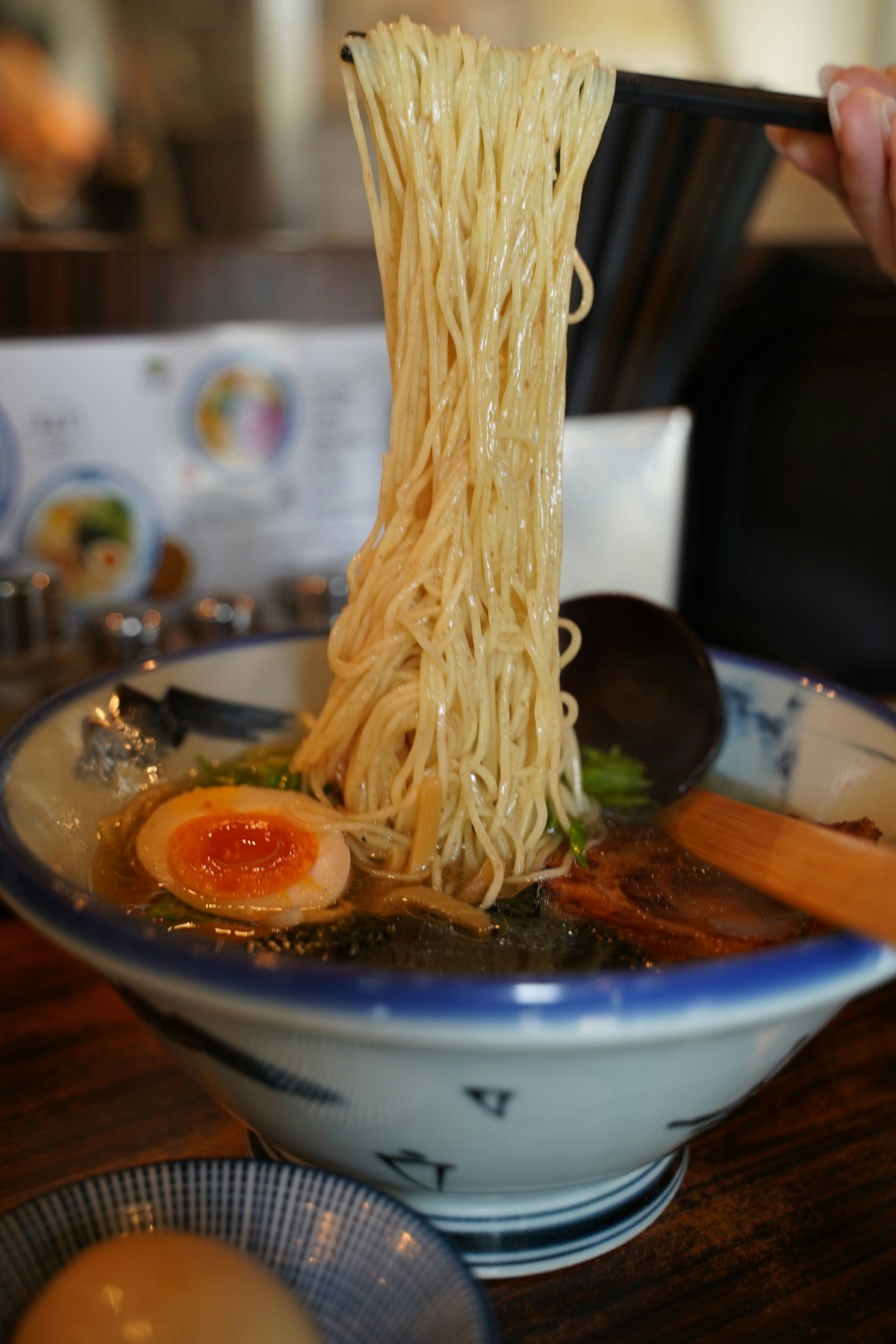
Kawaguchiko’s food culture draws from two directions: the mountain prefecture of Yamanashi, which has its own distinctive wheat and miso traditions, and the coastal waters of nearby Suruga Bay and the Fuji river system. The result is a food scene that is more interesting than you might expect from a lakeside resort town, with a clear regional signature in the hoto noodle and a collection of lake and sea ingredients that don’t appear commonly elsewhere.
Hoto: The Essential Kawaguchiko Dish
Hoto is Yamanashi Prefecture’s signature dish and the meal you eat when it’s cold, when the Fuji winds are coming off the lake, or when you’ve spent four hours hiking the Panorama Trail and need something substantial. It is a noodle stew: wide, flat wheat noodles - thicker and less refined than udon - cooked directly in a rich miso broth alongside pumpkin, taro, mushrooms, carrot, and seasonal mountain vegetables. The pumpkin breaks down during cooking and thickens the broth to a mellow orange stew.
Unlike most Japanese noodles, hoto arrives in an iron pot that remains hot on a stand at the table. The noodles continue to cook as you eat. The broth colour varies by restaurant - some lean toward red miso, others use blended miso - but the pumpkin is the constant, and its sweetness against the savoury miso base is the defining flavour.
Houtou Fudou (near the north shore of the lake, open 11am–9pm, hoto from ¥1,680 as of 2026) is the most recognised name and worth the visit - the restaurant occupies a building shaped like a traditional Yamanashi fire pit drum, visible from the road. The bowls are large; one is enough for lunch. Arrive at opening or after 2pm to avoid the worst queues. The Fujiyoshida branch is often less crowded than the lakefront location.
Sanrokuen (near Kawaguchiko Station, from ¥1,500) is a smaller, less theatrical option with consistent hoto and shorter wait times. Good for breakfast or an early lunch if you are heading out for the day.
Fujimasu: Lake Kawaguchiko’s Own Trout
Fujimasu is a freshwater salmon trout found in the Fuji Five Lakes, particularly Lake Kawaguchiko and Yamanakako. The fish is native to the lakes and cannot be farmed elsewhere - its flavour is tied to the cold, clean spring water that feeds the lakes from Mount Fuji’s snowmelt.
The flesh is a pale pink-orange, similar to light salmon, with a clean, delicate flavour and lower fat content than farmed Atlantic salmon. Restaurants near the lake serve it as:
- Sashimi: thin-sliced raw Fujimasu, typically served with wasabi and a light soy dipping sauce (from ¥1,200 for a portion)
- Seared Fujimasu: lightly charred over a gas flame, bringing out a slightly richer flavour while keeping the centre cool and soft
- Salt-grilled whole Fujimasu (shio-yaki): the whole fish, salted and grilled over charcoal, typically served at lakeside restaurants as part of a set meal (from ¥1,800)
- Smoked Fujimasu: sold as a packaged souvenir product at shops near Kawaguchiko Station (from ¥900 per package)
Kawaguchiko Sushi Dining (near the north shore, lunch omakase from ¥5,000) includes Fujimasu as part of their seasonal sushi selection.
Sakura Shrimp
Sakura shrimp are the marine ingredient that travels furthest to appear on Kawaguchiko menus. They come from Suruga Bay - a deep-water bay between Shizuoka and the Izu Peninsula - where they are harvested by offshore trawlers during two annual seasons (spring and autumn). The shrimp are tiny, semitransparent, and coral-pink, and are typically dried whole.
The dried version has a concentrated sweet-salty-oceanic flavour. They appear in local food as:
- Sakura shrimp kakiage (deep-fried tempura fritter of shrimp with vegetables, ¥300–¥500)
- Sakura shrimp soba: as a dry topping on cold soba, providing texture and umami
- Sakura shrimp rice bowl (don): shrimp over rice with a light dressing
- Packaged dried sakura shrimp: sold in 50g and 100g bags as a souvenir (from ¥600)
Yamanashi restaurants near the lake serve sakura shrimp kakiage as a side dish or snack. It is one of the most distinctive flavours in the region.
Yamanashi Wine
Kawaguchiko sits within the Koshu wine region - one of Japan’s most productive grape-growing areas, built around the indigenous Koshu grape variety. Koshu produces a pale, delicate white wine with a slightly aromatic character, notably lower in alcohol than European equivalents and designed to pair with Japanese food.
Several vineyards operate in the Katsunuma wine region east of Kawaguchiko (about 45 minutes by train to Katsunuma Budokyo Station), and their wines appear on menus throughout the Fuji Five Lakes area. Bottles of local Koshu wine in shops and restaurants cost from approximately ¥2,500; by the glass in restaurants from ¥700. Lumière and Château Mercian are the most established labels.
If you are not going to the vineyards, the depachika at Omiya or the souvenir shops near Kawaguchiko Station carry a reasonable selection of Yamanashi wines.
Yoshida Udon
Fujiyoshida city, about 10 minutes east of Kawaguchiko by Fujikyu Railway (¥250 as of 2026), has its own local udon tradition. Yoshida udon uses thick, very firm noodles - significantly chewier than standard udon - served in a mix of soy and miso broth with toppings including horse meat (basashi) and cabbage. The roughness of the noodles is intentional and is the defining characteristic; locals order it cold or hot depending on the season.
Small family-run udon shops in Fujiyoshida serve a bowl for ¥500–¥700. Many close early (by 2pm) or on irregular days - checking ahead is worthwhile. The tourist office at Kawaguchiko Station can recommend which shops are open.
See Kawaguchiko through its food: Food and cultural tours in Kawaguchiko often include market visits, tastings, and dishes you’d never find independently.
Convenience and Budget Eating
Convenience stores (Lawson, 7-Eleven, FamilyMart) near Kawaguchiko Station stock onigiri, prepared bento boxes, hot foods, and instant hoto ramen kits. These are practical for early morning lakefront visits before restaurants open at 11am.
For a budget meal with lake views, several café-style restaurants near the north shore serve simple sets (curry rice, ramen, soba) from ¥900–¥1,200. The north shore Ohashi Bridge area has a cluster of these.
See the Kawaguchiko travel guide for general orientation and transport, and day trips from Kawaguchiko for Chureito Pagoda, Oshino Hakkai, and Mount Fuji access.
Where to stay: Search hotels in Kawaguchiko on Booking.com
See also: Best restaurants in Kawaguchiko · Things to do in Kawaguchiko · Where to stay in Kawaguchiko · Mount Fuji climb guide · Kanto region guide