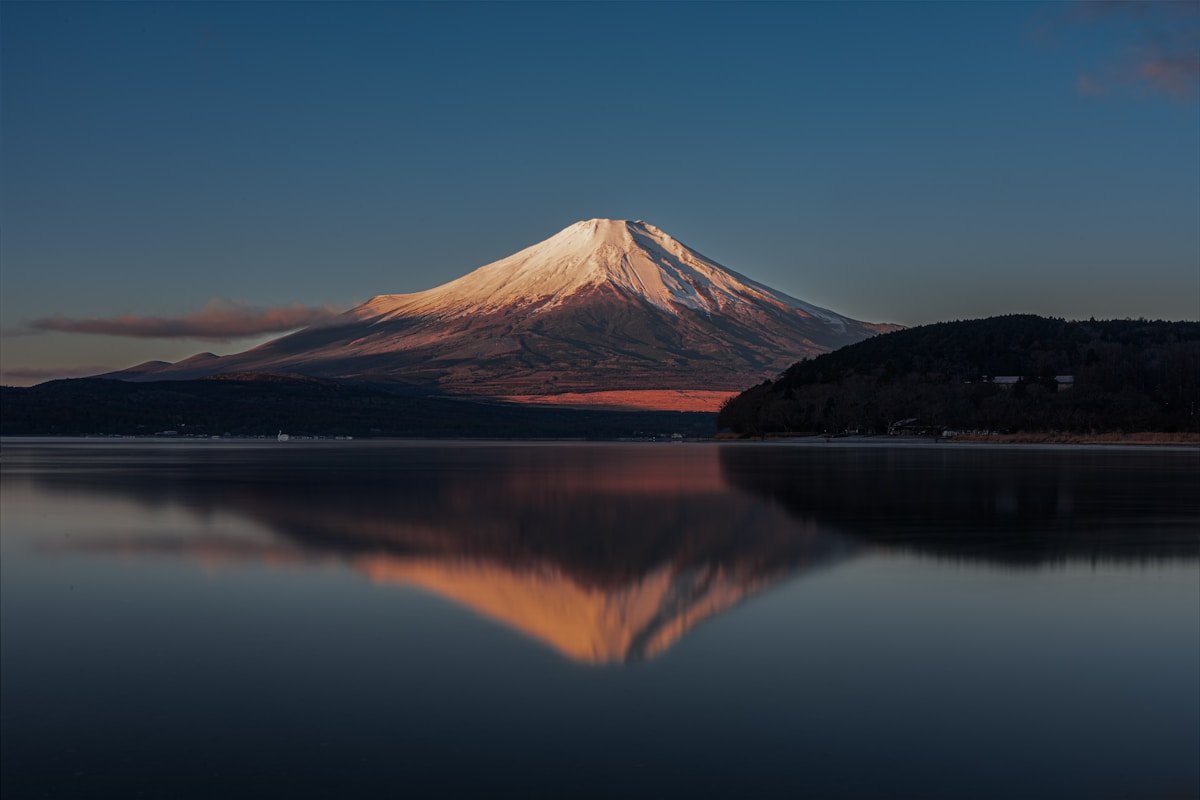
Kawaguchiko is the most visited of the Fuji Five Lakes and the primary base for those who want extended time near Mount Fuji without climbing it. The lake sits at 830 metres elevation directly north of the mountain, and on clear mornings the Fuji reflection in the lake’s still surface is among the most striking landscapes in Japan. The experience of staying here for a week rather than day-tripping changes the odds considerably: you are present for the still hours before day-trippers arrive, for the occasional perfectly clear afternoon, and for the sunset and early morning light that transforms the mountain’s appearance hour by hour. The town itself is modest — a resort economy of hotels, souvenir shops, and restaurants — but the natural setting is remarkable.
Choosing Your Area
North Shore (Kawaguchiko-Kitaguchi) is where the famous Fuji views are concentrated. The photographic icon — Fuji reflected in the lake with cherry blossom or autumn leaves in the foreground — is taken from the Chureito Pagoda viewpoint and the north shore lakeside. Hotels and guesthouses here command a premium for the view, particularly those with lake-facing rooms.
Kawaguchiko Station / South Shore is the transport hub: buses from Shinjuku (2.5 hours) and local services to Fujiyoshida terminate here. The highest concentration of accommodation is within walking distance of the station. Less dramatic Fuji views than the north shore but more practical amenities.
Ubuyagasaki Peninsula / East Shore juts into the lake from the eastern end, offering unobstructed Fuji views across the water. Several luxury and boutique hotels occupy this position, targeting those who want a quieter setting without sacrificing the view.
Funagatayama / Northwest Lake has a quieter, more residential character. The Kawaguchiko Music Forest Museum and Oishi Park (known for its kochia grass and Fuji backdrop in autumn) are at the western end.
Lakeside Hotels and Ryokan
Kozantei Ubuya is widely considered one of Kawaguchiko’s finest ryokan: a hillside property on the north shore with outdoor onsen baths facing Fuji and Lake Kawaguchiko. The combination of traditional hospitality and the most photogenic lake view in Japan makes this a special-occasion choice. Rates from approximately ¥50,000–100,000 per person per night with kaiseki dinner and breakfast.
Fuji Marriott Hotel Lake Yamanaka is the closest major Western brand hotel to the lakes area (at Lake Yamanaka, 20 minutes from Kawaguchiko). For those who want the amenities and loyalty points of an international chain, it is the practical choice. Rates from approximately ¥25,000–50,000 per night.
For mid-range options, several ryokan and resort hotels along the north and south shores offer tatami rooms with private or shared onsen baths and Fuji-facing windows. Room-only rates from approximately ¥15,000–30,000 per night; meals included from approximately ¥22,000–45,000 per person per night.
Search lakeside hotels and ryokan in Kawaguchiko on Booking.com to compare current rates with minimum-night filters.
Guesthouses
Kawaguchiko has a growing guesthouse scene, particularly in the area near the station and north shore. Private rooms in guesthouses run approximately ¥5,000–9,000 per night, with some offering dormitory beds from ¥2,500–3,500 per night.
Several guesthouses specifically market toward the Fuji photography community, offering very early morning wake-up calls for pre-dawn lake shoots, storage for photography equipment, and communal areas where guests share condition reports on cloud cover. For photography-focused extended stays, these are the most practical choice.
Browse guesthouses near Kawaguchiko lake on Booking.com to compare options near the lake.
Using Fujiyoshida as an Extended-Stay Base
Fujiyoshida city (immediately east of Kawaguchiko, connected by the Fujikyuko Line) is a practical alternative base for longer stays. It has:
- Business hotels at urban prices (approximately ¥40,000–60,000 per week)
- A local supermarket and grocery infrastructure
- The Fujiyoshida Sengen Shrine and Arakura Sengen Shrine (the Chureito Pagoda viewpoint location)
- Direct bus and train connections to both Kawaguchiko and the Fuji Subaru Line 5th Station
For stays of two weeks or more, Fujiyoshida provides the practical base while Kawaguchiko’s lakeside character is accessible in 10 minutes.
Seasonal Considerations
Kawaguchiko’s accommodation market swings dramatically by season:
Cherry blossom (late March to mid-April): The north shore’s Fuji-cherry blossom combination is globally famous. Hotels book out months in advance and prices double or triple. Book well ahead for any stay during this period.
Summer climbing season (July to early September): The Fuji climbing season drives accommodation demand. The area is busy and humid; Fuji views are frequently cloud-covered.
Autumn (October to November): Excellent colour, good Fuji visibility, and more manageable crowds than sakura season. The autumn kochia grass at Oishi Park turns crimson.
Winter (December to February): Peak Fuji visibility with snow cap. Cold (temperatures regularly below 0°C) but the clearest views of the year.
Practical Notes for Long Stays
- Transport: The Retro Bus around the lake (¥1,000/day pass) covers the main access points. Car hire is the most practical option for accessing more remote lake shores and for day trips to Fuji.
- Groceries: The area near Kawaguchiko Station has a small supermarket and several convenience stores. Fujiyoshida has a better grocery infrastructure for self-catering.
- Internet: Hotel wifi is generally adequate. A local SIM adds reliability for those working remotely from Fuji-facing rooms.
- Weather volatility: Fuji is genuinely cloud-covered for many days, particularly in summer and during the rainy season (mid-June to mid-July). Build in multiple days for the best chance of clear views.
Approximate Costs Per Week (Accommodation)
| Type | Weekly Rate (per person) |
|---|---|
| Guesthouse (dormitory) | ¥18,000–25,000 |
| Guesthouse (private room) | ¥32,000–60,000 |
| Mid-range lakeside hotel (room only) | ¥70,000–130,000 |
| Lakeside ryokan (room + meals) | ¥120,000–210,000 |
| Luxury ryokan (Kozantei Ubuya) | ¥300,000–700,000+ |
Search all accommodation types in Kawaguchiko on Booking.com to compare current availability and pricing.