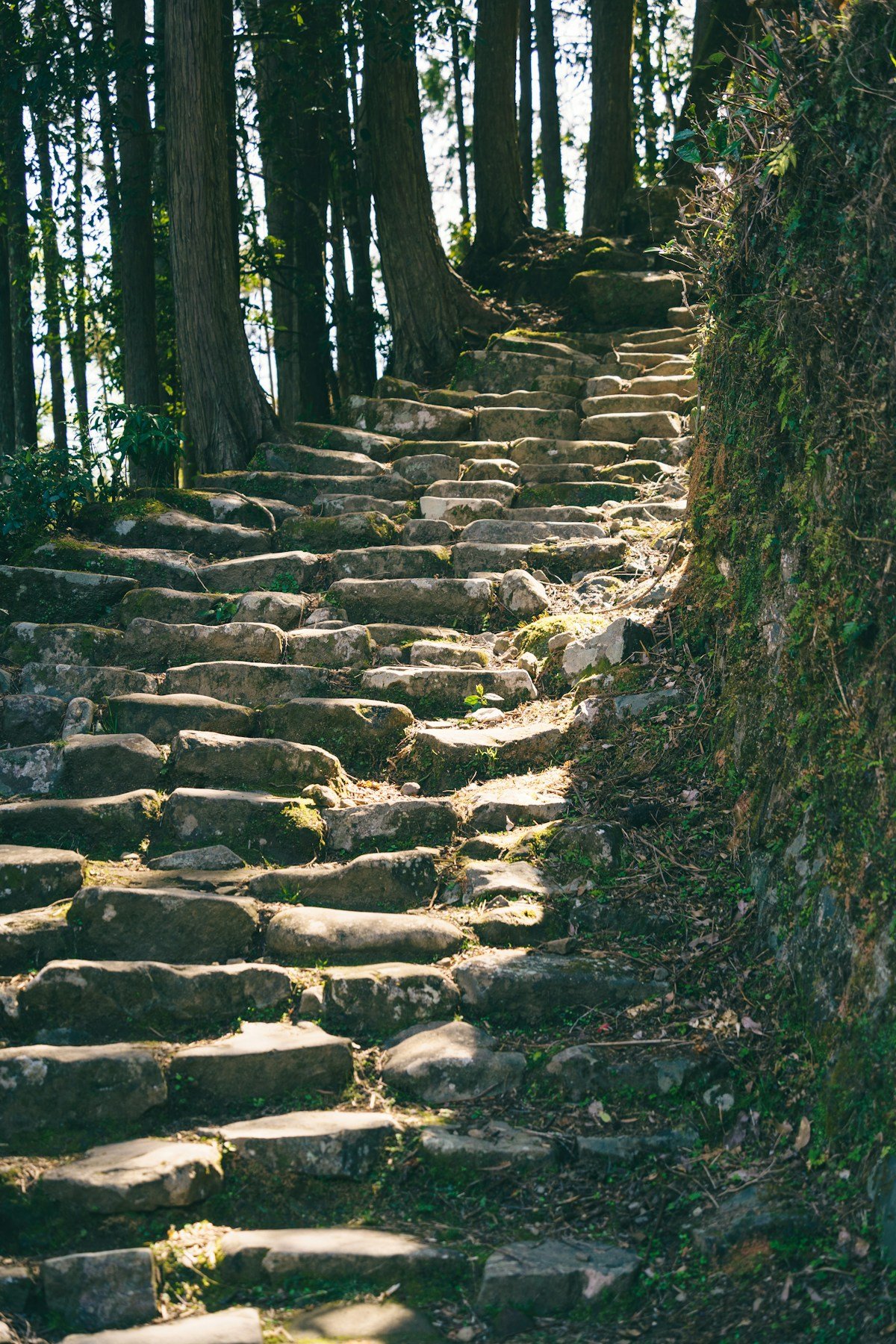
The Kumano Kodo is a UNESCO World Heritage pilgrimage network on the Kii Peninsula, roughly 3 to 4 hours south of Osaka by train and bus. These forest trails have been walked for more than 1,000 years, leading to the three Grand Shrines of Kumano - Hongu Taisha, Hayatama Taisha, and Nachi Taisha. Joining the Camino de Santiago as one of only two UNESCO-certified pilgrimage routes in the world, it remains an active place of spiritual practice and one of Japan’s finest long-distance walks.
Top Tours at a Glance
Here’s a quick comparison of top-rated Kumano Kodo tours on GetYourGuide:
| Tour | Duration | Price (from) | Highlights |
|---|---|---|---|
| Kumano Kodo Highlights & Trail Walk Day Tour from Osaka | Full day | from ¥18,000 | Nakahechi trail, Kumano Hongu Taisha, local lunch, English guide |
| UNESCO Kumano Kodo: 3 Grand Shrines & Nachi Hike from Osaka | 13 hrs | from ¥22,500 | All three Kumano shrines, Nachi waterfall, pickup available |
| Walk the Kumano Kodo to Kumano Hongu Taisha (Tanabe) | 3.5 hrs | from ¥17,400 | Takijiri to Hongu section, stone-paved forest trail, small group |
| Kumano Kodo UNESCO 3-Day Guided Trek | 3 days | from ¥173,400 | Full Nakahechi route, minshuku accommodation, luggage transfer |
Browse Kumano Kodo tours from Osaka → GetYourGuide
The Main Routes
Nakahechi Route
The most popular and accessible route, running from Tanabe (Wakayama) south to the Kumano Grand Shrines. The classic entry point is Takijiri-oji - a 40-minute bus ride from Kii-Tanabe Station on JR.
Key stages:
- Takijiri-oji to Chikatsuyu-oji: 13 km, 5 to 7 hours, cumulative ascent approx. 900 m - the most dramatic first day, stone-paved mountain paths through cedar and cypress
- Chikatsuyu-oji to Hosshinmon-oji: 14 km, 5 to 6 hours - long valley walking, quieter forest, several small shrines
- Hosshinmon-oji to Hongu Taisha: 7 km, 2.5 hours - the final approach across the Ōtori-jaya pass with views over the valley
Difficulty: Moderate. Well-marked, maintained paths throughout. Suitable for regular walkers in good footwear.
Kohechi Route
A mountain crossing from Koya-san (Mount Koya) to Hongu Taisha, covering 70 km over 4 days with passes above 1,700 metres. Less trodden than the Nakahechi, this is the option for hikers wanting a serious physical challenge alongside the spiritual context. Snow possible November to April at higher elevations.
Difficulty: Strenuous. Recommended only for hikers with hill-walking experience and appropriate kit.
Kiiji Route
Follows the Pacific coast from Tanabe to Nachi Taisha - a flatter, longer alternative that incorporates fishing villages and coastal cliffs. Less forested than the Nakahechi, but scenically distinctive. Used historically by pilgrims arriving by boat.
Guided Tour Options
Multi-Day Guided Treks
Oku Japan is the most established specialist operator for the Kumano Kodo. Their guided 4-day Nakahechi tour typically includes luggage transfer between minshuku (family-run guesthouses), English-speaking guide for the full route, and advance accommodation bookings.
- 4-day guided Nakahechi tour: approximately ¥165,000 to ¥220,000 per person (around USD 1,100 to 1,470), including accommodation and luggage transfer
- Self-guided packages (accommodation + luggage transfer, no guide): ¥75,000 to ¥120,000 per person (USD 500 to 800)
Walk Japan offers small-group guided tours with expert naturalist guides; their “Kumano Kodo” itinerary runs 5 days and combines mountain walking with cultural visits to shrines and hot spring towns. Prices from approximately ¥200,000 per person (USD 1,335).
Single-Day Guided Hikes
For travellers with less time, single-day guided hikes operate from Osaka or Kyoto to a highlight section of the Nakahechi. These typically cover the Takijiri-oji to Tsugizakura-oji section (8 km, 4 to 5 hours walking).
Via GetYourGuide and Viator, day tour prices range from approximately ¥12,000 to ¥25,000 per person (USD 80 to 165), usually including transport from Osaka, English guide, and basic lunch. Group sizes are typically 4 to 12 people.
Self-Guided with Luggage Transfer
The Nakahechi is easily walked independently. The Tanabe Tourism Board runs a free English-language information centre (Kumano Travel) in Tanabe city that provides trail maps, tide charts, and accommodation booking support. Luggage transfer between guesthouses can be arranged through local operators for approximately ¥1,000 to ¥1,500 per bag per transfer.
Getting There
From Osaka: JR Osaka to Kii-Tanabe (Kuroshio limited express), approximately 2 hours, ¥5,610 one way. The Japan Rail Pass covers this service. From Kii-Tanabe, buses run to Takijiri-oji (40 minutes, ¥920).
From Kyoto: JR Kyoto to Kii-Tanabe via the Kiinagashima route takes around 2.5 hours on the Kuroshio limited express, ¥6,270 one way.
Access from Koya-san (for Kohechi walkers): Koya-san is reached from Osaka-Namba by Nankai Electric Railway and the Koyasan Cable Car (80 minutes total, ¥1,640). The Kohechi trailhead starts at Garan, the main temple complex.
Mobile signal is patchy on the deeper forest sections of the Nakahechi, but reliable at trailheads and in Hongu village. Download offline maps before setting out. For data on the rail journey from Osaka and at guesthouses along the route, a Japan eSIM covers connectivity outside the forest sections.
Accommodation Along the Route
Minshuku and small inns are spaced throughout the Nakahechi at approximately one day’s walking apart. Most include dinner and breakfast (ippaku nishoku) at approximately ¥10,000 to ¥16,000 per person per night (USD 65 to 107). Advance booking is essential in spring and autumn. English-language booking is available through Kumano Travel.
At Hongu Taisha, the Watarase Onsen area has larger hotels and ryokan, with the added attraction of an enormous rotenburo (outdoor onsen) fed directly by a thermal spring - often listed among Japan’s top outdoor baths.
What to Pack
- Trail shoes or light hiking boots with ankle support (stone paths can be slippery when wet)
- Rain gear - the Kii Peninsula has one of the highest rainfall totals in Japan
- Hiking poles (useful on steep descents, stone-paved switchbacks)
- Cash - many rural guesthouses and small shrines do not accept cards
- Offline maps via Maps.me or the Kumano Travel app (free)
Permits and Fees
There are no entry fees for the Kumano Kodo trail itself. The three Grand Shrines have free entry to the grounds; some inner sanctuaries charge a small fee (Nachi Taisha’s pagoda area: ¥300; Nachi waterfall viewpoint near Nachi Taisha: ¥300).
The dual pilgrimage credential (pilgrim’s passport booklet for shrine stamps) costs ¥300 at Takijiri-oji and at the Tanabe Tourism Board office.