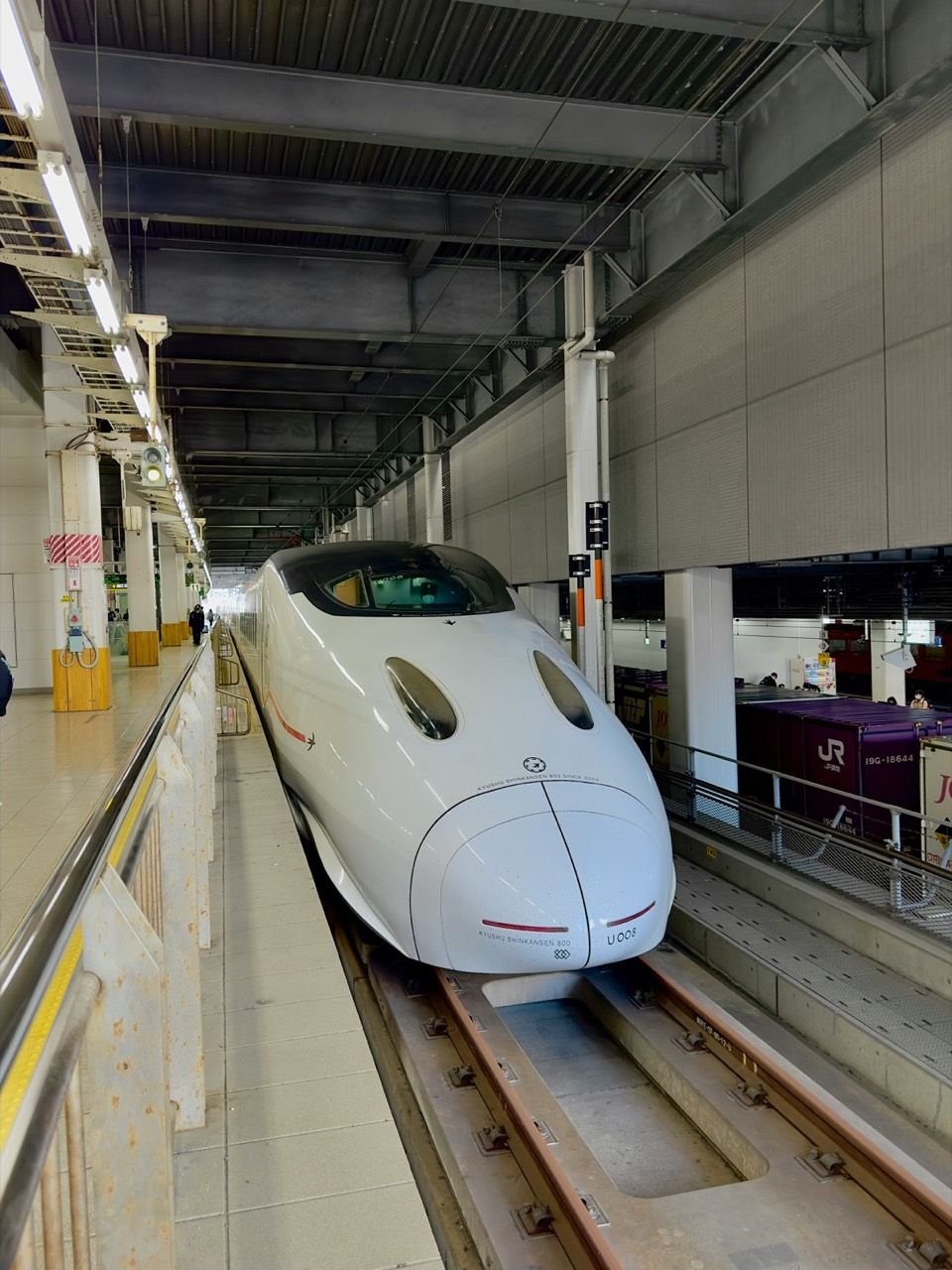
Kyushu has an efficient Shinkansen spine running from Fukuoka (Hakata) down the west coast to Kagoshima, and a network of limited express trains connecting the main cities that aren’t on the Shinkansen line. Beppu, Nagasaki, and Aso all require conventional limited express trains. The island is compact enough that most city-to-city journeys take 1–3 hours, making Fukuoka a practical hub for the entire region.
Getting to Kyushu
By plane to Fukuoka: The most efficient option for most international visitors. Fukuoka Airport is 6 minutes from Hakata Station by subway (¥260) - the closest major airport to a major city centre in Japan. Flights from Tokyo Haneda take approximately 1 hour 30 minutes, with fares ranging from ¥10,000–30,000 one way depending on how far in advance you book. ANA, JAL, Peach, Jetstar, and StarFlyer all serve the route.
For groups or travellers arriving at awkward hours, pre-booked private airport transfers are worth considering as an alternative to the subway.
By Shinkansen from Tokyo/Osaka: The Tokaido-Sanyo Shinkansen runs from Tokyo to Hakata/Fukuoka. Tokyo to Hakata by Nozomi (fastest, not JR Pass covered) takes approximately 5 hours (¥23,390 reserved). Osaka Shin-Osaka to Hakata by Nozomi takes approximately 2 hours 20 minutes (¥15,000 reserved). Hikari and Sakura services are slower but covered by the JR Pass.
By ferry from Hiroshima: JR Ferry from Matsuyama → Hiroshima, combined with Shinkansen Hiroshima → Hakata (45 minutes, ¥7,460) is not an efficient option for most itineraries. The standard approach is direct Shinkansen.
The Kyushu Shinkansen
The Kyushu Shinkansen runs from Hakata (Fukuoka) to Kagoshima-Chuo, with intermediate stops at Shin-Tosu, Kurume, Shin-Omuta, Shin-Minamata, Shin-Yatsushiro, Shin-Tamana, Kumamoto, and Shin-Yamaguchi. Key journey times and fares (reserved seat):
| Route | Time | Fare |
|---|---|---|
| Hakata → Kumamoto | 33 minutes | ¥5,130 |
| Hakata → Kagoshima-Chuo | 1 hour 15 minutes | ¥10,470 |
| Kumamoto → Kagoshima-Chuo | 44 minutes | ¥7,060 |
These are the Mizuho/Sakura services - both are covered by the JR Pass (Sakura) or JR Pass + surcharge (Mizuho). The Mizuho (non-stop to Kagoshima) is not covered by the standard JR Pass.
Kyushu Rail Pass
JR Kyushu offers dedicated rail passes for visitors:
Northern Kyushu Rail Pass (3 days): ¥8,500 - covers Hakata, Nagasaki, Sasebo, Beppu, Oita, and the Kyushu Shinkansen to Kumamoto. Does not include the southern section to Kagoshima.
All Kyushu Rail Pass (3 days): ¥15,000 - covers the entire JR Kyushu network including the Kyushu Shinkansen to Kagoshima and all limited express services.
All Kyushu Rail Pass (5 days): ¥17,500
The Northern Kyushu pass is the best value for visitors doing Fukuoka → Nagasaki → Beppu → Hakata. The All Kyushu pass is worthwhile if you’re adding Kagoshima and Miyazaki.
Calculate whether the pass pays for itself: Hakata → Nagasaki (¥4,960) + Nagasaki → Beppu (¥6,820 via Hakata) + Beppu → Hakata (¥5,250) = approximately ¥17,030 in unreserved fares. The 3-day Northern pass (¥8,500) beats this by a wide margin.
City to City: Key Routes
Hakata → Nagasaki: The Kamome limited express from Hakata runs directly to Nagasaki in approximately 1 hour 50 minutes (¥4,960 reserved). The route crosses the Omura Bay area - scenic in clear weather. As of 2022, the Nishi-Kyushu Shinkansen opened for the Takeo-Onsen to Nagasaki section, which new Kamome services use - check JR Kyushu timetables for the most current routing.
Hakata → Beppu: The Sonic limited express from Hakata to Beppu takes approximately 2 hours 10 minutes (¥5,250 reserved). The Sonic runs along the coast in sections - reserved window seats on the right side (outbound from Hakata) offer sea views.
Beppu → Nagasaki: There is no direct train; the route goes via Hakata, taking approximately 4 hours total. Alternatively, a bus from Beppu to Oita Airport (¥550, 40 minutes) and a flight to Nagasaki (30 minutes, from ¥12,000) can be faster if fares are competitive.
Hakata → Kagoshima: Shinkansen direct (see times above). By limited express on conventional lines, it takes nearly 4 hours and is not practical.
Hakata → Kumamoto: Shinkansen (33 minutes, ¥5,130) or highway bus (2 hours, ¥2,220). The Shinkansen is clearly faster; the bus is significantly cheaper and runs frequently from Hakata Bus Terminal.
Highway Buses
Kyushu’s highway bus network is comprehensive and often the cheapest option for non-Shinkansen routes.
Hakata → Beppu: Highway bus from Hakata Bus Terminal takes approximately 2.5 hours and costs ¥2,900–3,500 depending on operator and service. Book in advance online (Willer Express, Kyushu Sanko Bus) for discounted rates. Good option versus the Sonic limited express if you prioritise cost over time.
Hakata → Nagasaki: Highway bus approximately 2.5 hours, ¥2,630. Similar journey time to the limited express but considerably cheaper.
Hakata → Kagoshima: Highway bus approximately 3 hours 30 minutes, ¥4,680. The Shinkansen (1h15) is a much better option on this route.
Within Cities
Fukuoka: Subway system (Kuko Line, Hakozaki Line, Nanakuma Line) covers the main visitor areas. Single fares ¥210–370. 1-day pass: ¥640. ICOCA and Suica accepted. The Nishitetsu tram and buses supplement the subway for neighbourhoods not on the metro map.
Nagasaki: The city tram (streetcar) is the most useful transport tool for visitors. Flat fare ¥140/ride (pay on exit). A 1-day tram pass costs ¥500 and is good value for a full day of sightseeing. The main lines connect Nagasaki Station, the Chinatown area, Glover Garden, Dejima, and the Peace Park.
Beppu: City buses connect the main spring areas (Kannawa, Hamawaki, central) at ¥200–310/ride. A tourist day pass for the Kampo no Yado bus circuit (which hits all 7 Jigoku hells) costs ¥700 from the tourist information office at Beppu Station. Rental bicycle: ¥1,000/day from the station tourist office - practical for the flat central area.
Kagoshima: Trams (streetcars) run from Kagoshima-Chuo Station to the city centre and Sakurajima ferry port. Flat fare ¥180. 1-day tram pass ¥600. The Sakurajima ferry (¥160 each way) departs every 15 minutes from the ferry terminal near the Kinko Bay waterfront - no booking required.
Once the transport is sorted, see what to do in our best things to do in Kyushu guide, and book a base from our where to stay in Kyushu guide.
This page is part of our wider Kyushu region guide, which covers the main cities and sights.