Japan is one of the most rewarding food destinations on earth, but for vegans and vegetarians it can also be one of the trickiest. The challenge is not a shortage of vegetables - it is dashi. The invisible fish and kelp broth that underpins much of Japanese cooking is in miso soup, noodle broths, simmered dishes, and sauces you would never suspect. With a bit of knowledge and a handful of Japanese phrases, eating well without meat, fish, or animal products is absolutely achievable.
The Hidden Ingredient Problem
Japanese cooking is built around umami, and the primary umami carrier is dashi - typically bonito fish flakes (katsuobushi) or kelp (kombu) simmered together. Kelp dashi on its own is vegan; combined with bonito it is not. The issue is that a dish can look entirely vegetarian - a bowl of pickled vegetables and rice, for example - and still contain dashi in the cooking liquid.
Dairy and eggs appear far less often than in Western cooking, but they do show up: butter in some breads, eggs in tempura batter, mayonnaise in convenience store salads. Being precise about what you avoid, and communicating that clearly, is the key to eating without surprises.
Essential Japanese Phrases for Menus
Print these or save them on your phone. Showing a card in Japanese is more effective than explaining in English.
Key words to recognise on menus:
- 肉 (niku) - meat
- 魚 (sakana) - fish
- 豚 (buta) - pork
- 鶏 (tori) - chicken
- 牛 (gyū) - beef
- えび (ebi) - shrimp/prawn
- だし (dashi) - fish/kelp stock
- かつおだし (katsuodashi) - bonito fish stock
- 卵 (tamago) - egg
- 乳製品 (nyūseihin) - dairy products
Phrases to use:
- 私はベジタリアンです - Watashi wa bejitarian desu - “I am vegetarian”
- 私はヴィーガンです - Watashi wa vīgan desu - “I am vegan”
- 肉と魚を食べません - Niku to sakana o tabemasen - “I don’t eat meat or fish”
- だしは大丈夫ですか? - Dashi wa daijōbu desu ka? - “Does this contain dashi?”
- これに動物性食品は入っていますか? - Kore ni dōbutsusei shokuhin wa haitte imasu ka? - “Does this contain animal products?”
Shojin Ryori: Buddhist Temple Cuisine
Shojin ryori (精進料理) is Japan’s oldest plant-based food tradition, developed by Buddhist monks over a thousand years ago. It excludes meat, fish, and often the five pungent roots (onion, garlic, leek, chives, shallots). What remains is extraordinarily refined: seasonal vegetables, mountain herbs, tofu in multiple forms, sesame, miso, and rice, arranged with the same care as a kaiseki meal.
The best places to experience shojin ryori are temple lodgings (shukubo), particularly in Koyasan (Wakayama Prefecture) and Kyoto. At Koyasan, dozens of temples offer overnight accommodation with shojin ryori included - expect to pay approximately ¥15,000–¥25,000 per person including dinner and breakfast. Standalone shojin restaurants in Kyoto include Shigetsu at Tenryuji temple in Arashiyama (lunch courses from approximately ¥3,500) and Izusen near Daitokuji temple (courses from approximately ¥2,500 as of 2026). Book both well in advance, particularly for weekend lunches.
Vegan-Friendly Restaurant Chains
T’s TanTan (T’s たんたん) The most famous dedicated vegan ramen chain in Japan. All broths and toppings are plant-based, including a rich sesame tan-tan broth that rivals any meat version. Multiple locations inside Tokyo Station (both the Keiyo and Yaesuguchi concourses), making it genuinely convenient. Bowls run approximately ¥1,000–¥1,400.
Ain Soph Tokyo-based vegan restaurant group with several locations including Shinjuku, Ginza, and Ikebukuro. The menu covers everything from Japanese curry to pasta to vegan burgers and pancakes - excellent for groups with mixed dietary requirements. Lunch sets approximately ¥1,500–¥2,200; dinner from ¥2,500 per person.
Mumokuteki Café (むもくてき) Kyoto institution for organic, vegan Japanese and fusion cooking. The lunch set (approximately ¥1,400) includes rice, miso soup (made with kombu dashi), two side dishes, and a small dessert. Popular with locals as well as visitors - arrive before noon or expect a wait.
Vegans Café and Restaurant (Tokyo, Shimokitazawa) Small neighbourhood restaurant with a fully vegan menu of Japanese-influenced dishes. Course dinners from approximately ¥3,500; à la carte from around ¥800.
Nataraj (ナタラジ) Indian vegetarian restaurant with branches in Shibuya, Shinjuku, and Ginza. Fully vegetarian and partially vegan (ask about ghee); useful when you need a reliable fallback in a busy area. Lunch thali approximately ¥1,200–¥1,600.
Reliable Everyday Options
Outside dedicated restaurants, these categories are consistently safe or easily adapted:
Kaitenzushi (conveyor belt sushi): Most chains offer cucumber maki (kappamaki), pickled plum rolls (umeshiso maki), and avocado rolls. The soy sauce is vegan; check ginger, which is sometimes pickled in vinegar-sugar brine. The rice vinegar used in sushi rice typically contains no animal products.
Yakitori / Izakaya: Not ideal for vegans, but edamame (salted boiled soybeans), tofu dishes such as agedashi tofu (check for dashi) and hiyayakko (chilled tofu with soy sauce), and vegetable tempura are usually on the menu.
Ramen shops: The broth is the problem - pork (tonkotsu), chicken (tori), and fish (shio or shoyu with dashi) are standard. Seek out shops advertising kombu or mushroom (kinoko) broth, or look for the rare vegan-labelled option.
Soba restaurants: Plain cold soba (zaru soba) with tsuyu dipping sauce is the catch - tsuyu almost always contains dashi. In Nagano Prefecture, however, some traditional soba restaurants use kombu-only dashi, and a handful serve a topping called tororo (grated mountain yam) that makes for a genuinely satisfying vegan bowl. Ask about the dashi before ordering.
Convenience Store Options
Japan’s convenience stores (konbini) - 7-Eleven, FamilyMart, Lawson - are not vegan paradise, but they are not hopeless either.
Safe picks most of the time:
- Onigiri (rice balls) with umeboshi (pickled plum) filling - the most reliable vegan option
- Edamame (usually in the chilled section or sold as a snack)
- Plain steamed rice packs
- Natto (fermented soybeans) - sold in small packs, usually eaten with rice; check if the included sauce contains bonito extract
- Salted nuts and dried fruit
- Soy milk (豆乳, tōnyū) in small cartons - widely stocked
- Some chains stock onigiri labelled “vegan” in English in tourist-heavy areas
Watch out for: Pre-made sandwiches (almost always contain egg or mayonnaise), salads with dressing, and any item labelled だし in the ingredients.
Regional Plant-Based Specialties
Yuba, Kyoto Yuba is the delicate skin that forms on the surface of simmering soy milk - it is pulled off in sheets and eaten fresh (nama yuba) or dried. A Kyoto specialty with roots in temple cuisine, it appears in high-end kaiseki and in humble lunch sets across the city. Fresh yuba shops around Nishiki Market and the Fushimi Inari area sell it by the sheet for around ¥500–¥1,000. It is naturally vegan.
Soba, Nagano Nagano’s cold-climate buckwheat produces some of the best soba in Japan. The noodles themselves contain no animal products; the challenge is the dipping broth. Obuse, Matsumoto, and Nagano city all have soba restaurants worth seeking out - when ordering, ask whether the tsuyu uses katsuodashi or kombu-only (昆布のみのだし).
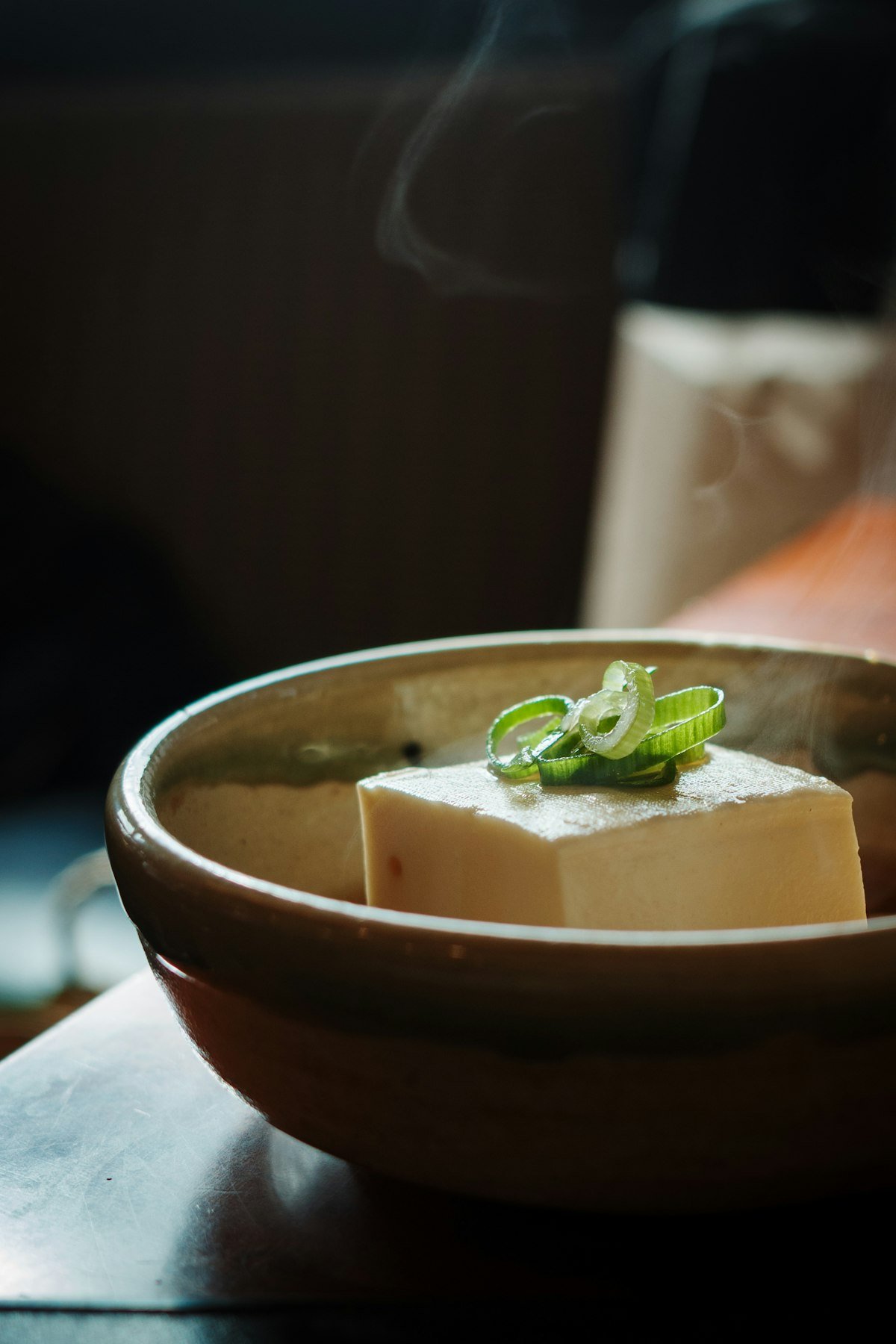
Tofu, Nikko Nikko is famous for yudofu - tofu simmered gently in kombu broth and served tableside. The dish originated here because the mountain spring water and the town’s long Buddhist temple history made tofu-making ideal. Several restaurants near Nikko Tōshōgū serve yudofu sets for approximately ¥2,000–¥3,000 as of 2026.
Kōya-Dofu, Koyasan High-altitude Koyasan developed kōya-dofu (freeze-dried tofu) as a preservation method - tofu frozen overnight, then thawed and dried. The result has a spongy, meaty texture that absorbs broth readily. It is a central ingredient in shojin ryori and available dried in supermarkets nationwide.
Natto, Ibaraki / Mito Mito (Ibaraki Prefecture) is the spiritual home of natto - fermented whole soybeans with a pungent smell and sticky texture that inspires polarised reactions. Nutritionally impressive and fully vegan, it is eaten with rice, mustard, and a small sauce packet. The sauce in supermarket-bought natto sometimes contains bonito; check the label.
Book a Vegan or Food Tour
Guided food tours are one of the most efficient ways to navigate the dietary landscape in Japan - a good guide handles communication, pre-vets kitchens, and takes you to places you would not find independently. Tokyo and Kyoto have a handful of dedicated vegan-friendly walking tours and cooking classes that cover temple cuisine, tofu-making, and market shopping. Browse food and cooking experiences in Japan to see current options on GetYourGuide, filtered by date and group size.
Using HappyCow and Other Apps
HappyCow is the most complete directory of vegan and vegetarian restaurants in Japan. The coverage in Tokyo, Kyoto, and Osaka is excellent, with user reviews that flag hidden dashi issues and chain-specific adaptations. Download the app before you travel and save restaurants to your offline map. Filter by “vegan” rather than “vegetarian” if dairy and egg are also a concern.
Google Maps has improved significantly - searching “vegan restaurant Tokyo” now surfaces a useful mix of dedicated places and restaurants with vegan options. Cross-reference with HappyCow for reliability.
TabiEats and YouTube are useful pre-trip research tools: several Japan-based food creators document vegan experiences in detail, including at convenience stores and rural areas where English signage is rare.
Tokyo Neighbourhoods to Focus On
Shimokitazawa and Nakameguro have the highest concentration of independent vegan and vegetarian restaurants in Tokyo. Shinjuku and Shibuya have more chain options but also reliable Indian vegetarian restaurants. In Kyoto, the area around Nishiki Market and Fushimi Inari has shojin-influenced options within walking distance; the Arashiyama district specifically is strong for temple cuisine.
A Practical Note on Communication
Explaining dietary restrictions in Japan requires patience and specificity. “Vegetarian” (bejitarian) is understood but not always applied strictly - the assumption may be that dashi-based broth is acceptable. “Vegan” (vīgan) is increasingly understood in cities but less so in rural areas. The most effective approach is to show a written card that lists exactly what you do not eat, rather than relying on a single label. Several vegan travel websites offer free printable Japanese allergy/diet cards - download one before you travel.
Japan rewards the effort. Once you know where to look, the quality of plant-based cooking here - from a ¥150 konbini onigiri to a ¥15,000 shojin kaiseki - is among the best in the world.
Plan Your Trip
- Flights - Find the best fares to Japan
- Hotels - Search hotels in Japan on Booking.com
- Travel Insurance - Get covered before you go
- eSIM - Stay connected from landing
- Car Rental - Compare prices across providers
- Tours and activities - Browse experiences on GetYourGuide