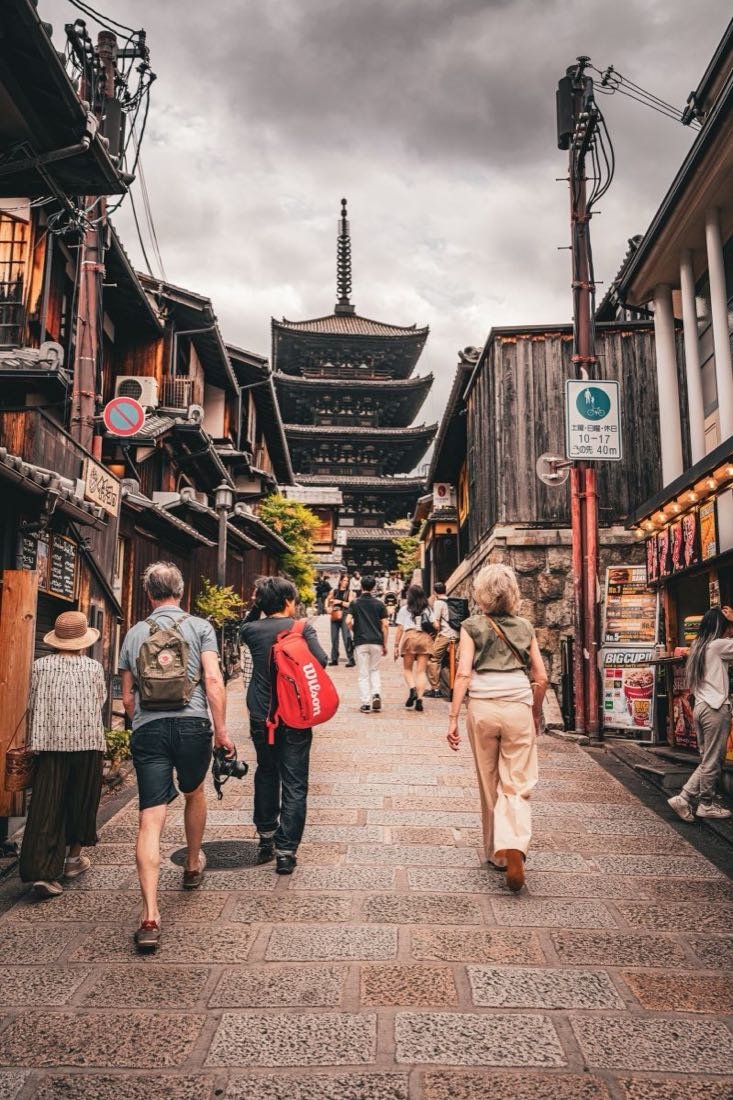
Kyoto rewards careful timing. It is Japan’s most photogenic city and one of its most visited - which means peak seasons here are noticeably more intense than in Tokyo. Getting the timing right affects not just what you see, but how much you pay and how many other people you share it with.
Quick Summary
| Season | Months | Temps (°C) | Crowds | Budget |
|---|---|---|---|---|
| Spring | Mar–May | 10–23 | ★★★★★ | Very High |
| Summer | Jun–Aug | 24–36 | ★★★ | Mid |
| Autumn | Sep–Nov | 12–26 | ★★★★★ | High |
| Winter | Dec–Feb | 1–10 | ★★ | Low |
Month-by-Month Breakdown
January - Cold (1–9°C), dry, and quiet. New Year celebrations run January 1–3 with significant shrine activity but relatively low tourist pressure otherwise. Hotel prices at annual lows. Crowds: 2/5.
February - Still cold but plum blossoms appear at Kitano Tenmangu from early February. A beautiful, uncrowded time to visit. Crowds: 2/5.
March - Cherry blossom speculation begins. Temperatures climb to 8–15°C. Crowds build sharply from late March as blossoms open. Book hotels months ahead. Crowds: 3–5/5 (rising through month).
April - Peak cherry blossom, then a brief post-bloom quieter spell before Golden Week (April 29–May 5). Accommodation prices are at their very highest. Temperatures 14–20°C. Crowds: 5/5.
May - Golden Week crowds dissipate after May 5. Mid-to-late May is genuinely pleasant - 18–24°C, green gardens, moderate prices. One of the hidden gems of the calendar. Crowds: 3/5.
June - Rainy season: overcast, humid, 22–27°C. Temple gardens are lush and green. Crowds lighten considerably; this is excellent value for Kyoto. Crowds: 2/5.
July - Hot (28–36°C) and very humid. Gion Matsuri celebrations fill the entire month. Evening yoiyama festivals on July 16 and 23 are atmospheric street celebrations. Crowds: 3/5.
August - Hottest month. Obon celebrations mid-August include traditional dances and Daimonji Gozan Okuribi fire festival (August 16) - a famous event worth attending. Crowds: 3/5.
September - Still warm and humid early in the month; typhoon risk. Temperatures ease to 20–26°C by late September. Crowds moderate. Crowds: 2/5.
October - Warm and clear (16–23°C). Pre-foliage crowds are lower than November. An excellent under-appreciated window. Crowds: 3/5.
November - Peak autumn foliage mid-to-late November. Tofuku-ji, Eikan-do, and Arashiyama draw enormous crowds - arrive before 8am for temple gardens. Hotel prices spike. Crowds: 5/5.
December - Cold (3–12°C), quickly uncrowded after mid-December. Year-end illuminations at Kodai-ji and Eikan-do run into December. Avoid December 29–January 3 for some closures. Crowds: 2/5.
Festivals and Events Calendar
- February (early) - Setsubun celebrations at Yoshida Shrine (February 2–3)
- March 1–14 - Omizutori water-drawing ceremony at Nara’s Todai-ji (easy day trip from Kyoto)
- Late March / Early April - Hanami season; Philosopher’s Path and Maruyama Park
- July 1–31 - Gion Matsuri; main processions July 17 and July 24
- August 16 - Daimonji Gozan Okuribi (five mountain bonfires visible across the city)
- October - Jidai Matsuri historical procession (October 22)
- November - Peak koyo (autumn foliage) season
Budget Tips by Season
Cheapest: January and February offer hotel rates 25–40% below spring peaks. Mid-June is similarly affordable.
We compare areas and price ranges in our Kyoto where-to-stay guide, and you can check Kyoto hotel availability for your dates before rates climb.
Best value window: Late May and early June - good weather, significantly lower prices than spring peak, full access to all attractions.
Most expensive: Cherry blossom season (late March to Golden Week) and mid-to-late November are the two most expensive periods. A basic guesthouse that costs ¥8,000 in January can reach ¥18,000–25,000 during cherry blossom peak.
Practical note: Kyoto’s most popular temples (Fushimi Inari, Kinkaku-ji, Arashiyama Bamboo Grove) are very early-morning-friendly - arriving at 7–8am dramatically reduces your crowd experience regardless of season.
Verdict
Late May and early October are the best-value windows: comfortable temperatures, no extreme crowds, and prices roughly half of spring peak. Cherry blossom season is worth it if you have booked months ahead and are mentally prepared for the crowds - it is genuinely beautiful. Autumn foliage rivals spring for beauty and exceeds it in cost; consider visiting in late October to get the atmosphere at lower prices with some early colour. Avoid July and August unless you specifically want Gion Matsuri or are heat-tolerant. Once your dates are set, Kyoto tours and experiences are worth booking ahead in peak weeks.