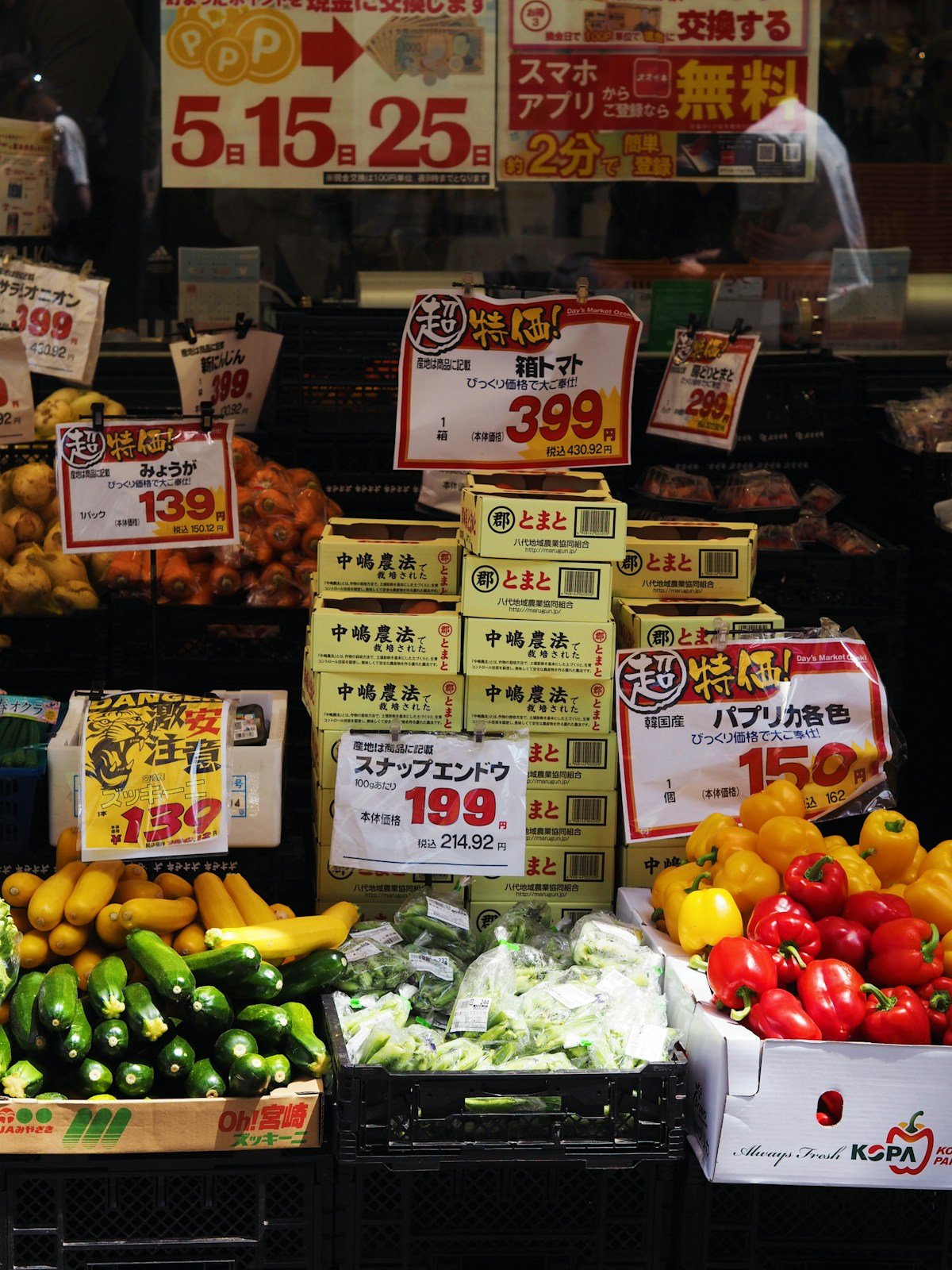
Aomori’s food identity comes from the sea and the orchard. Mutsu Bay in the centre of the prefecture provides some of Japan’s finest scallops and sea urchin; the surrounding hills and valleys grow the apples that account for roughly 60% of the national harvest. The result is a regional cuisine that is confident and ingredient-led, with a handful of dishes that cannot be found in this form anywhere else in Japan.
Hotate - Mutsu Bay Scallops
The single food most worth seeking out in Aomori is the local hotate (scallop). Mutsu Bay’s enclosed, calm waters and cold temperatures produce scallops that are consistently larger, sweeter, and more tender than those from warmer southern waters. Local aquaculture has refined the product over decades - the scallops are rope-hung rather than dredged, which means less damage to the shell and meat.
At the Gyosai Center morning market, fresh scallops cost approximately ¥300–¥500 per shell raw, or can be grilled on small tabletop braziers at market stalls. A kaisen-don (seafood rice bowl) featuring three to five large scallops costs approximately ¥1,800–¥2,200 as of 2026. Eating scallop here and comparing it to what you may have had in Tokyo is a revealing exercise.
Uni - Sea Urchin
Mutsu Bay also produces high-quality bafun uni (short-spined sea urchin), typically harvested from June to August. Fresh local uni is available at the morning market and at izakayas throughout the city - served raw on rice, in miso soup, or as sashimi. A small uni don (rice bowl) at a good market stall or restaurant runs approximately ¥2,200–¥3,000 as of 2026. Quality varies significantly by season; the July to August peak is the best time to eat it.
Apple Pork
Aomori prefecture raises pigs partly on apple pomace - the fibrous residue left after apple pressing for juice and cider. The result is meat with a mild, almost sweet character in the fat and a slightly firmer texture than standard pork. Apple pork is served as tonkatsu (crumbed cutlet), as grilled slices with apple miso sauce, and as yakiniku (grilled meat). Several izakayas in the city specialise in it; a grilled set runs approximately ¥1,200–¥1,800 as of 2026. The A-Factory cidery on the waterfront also sells apple pork buns (approximately ¥350).
Tsugaru Soba
The soba noodles of the Tsugaru region (western Aomori) are made with locally grown buckwheat and served in a clean dashi broth. The style is simpler than Kyoto kaiseki soba or Tokyo-style cold zaru soba - the focus is on the broth and the noodle texture rather than toppings. A basic bowl of Tsugaru soba costs approximately ¥700–¥900 at a traditional soba restaurant. The dish is particularly good in autumn (September to November) when the new buckwheat crop is freshly milled.
Aomori Ramen - Niboshi Soy Style
Aomori has its own ramen style: a clear soy-based soup with a pronounced niboshi (dried sardine) note that gives the broth a savoury, slightly bitter depth. It is served with thin straight noodles, chashu, menma (bamboo shoots), and nori. The style is less showy than Hokkaido ramen but quietly distinctive. Several ramen shops near Aomori Station serve bowls for approximately ¥850–¥1,100 as of 2026.
Jappa-Jiru (Fisherman’s Offcut Soup)
A traditional dish that originated on fishing boats and in coastal households, jappa-jiru is a miso soup built from the parts of cod, flounder, or pollack left after filleting - heads, fins, cartilage, and bones. Simmered slowly with daikon, tofu, green onion, and sometimes konnyaku, the result is a thick, intensely flavoured soup quite different from the refined miso soups of restaurant kaiseki. It appears on menus at traditional restaurants and izakayas, especially in winter, and costs approximately ¥500–¥800 as a standalone dish.
Aomori Apples
The local apple varieties are worth engaging with beyond the generic red apple. Fuji - the variety Aomori is most associated with nationally - has a dense texture and very high sugar content. Mutsu (also called Crispin) is sharper and more aromatic. Orin is golden, mildly acidic, and prized for juicing. Fresh apples are available at the Gyosai Center market, at the A-Factory shop, and at supermarkets throughout the city. During harvest season (September to November), the quality of fruit at markets is noticeably higher than what is shipped nationally.
Apple Cider and Apple Juice
Aomori produces a small but growing range of apple ciders - fizzy, dry, and with genuine apple character. The A-Factory on the waterfront is the most accessible place to taste them; the tasting flight (three 100ml glasses) costs approximately ¥700 as of 2026. The bottled single-variety apple juices (pure pressed, no added sugar) sold at convenience stores and supermarkets are also excellent and cost approximately ¥180–¥250 for 1 litre.
Tsugaru Shamisen-Side Snacks
When attending a Tsugaru shamisen live performance in Hirosaki or Aomori city, small bites are typically available at the venue - rice crackers, edamame, and light izakaya snacks priced at ¥300–¥600 per plate. These are minor but atmospheric accompaniments to the experience.
See Aomori through its food: Food and cultural tours in Aomori often include market visits, tastings, and dishes you’d never find independently.
Seasonal Produce
Aomori’s brief summer and long autumn produce excellent cherries (June to July), pears, and stone fruit alongside the apples. The Gyosai Center and Aomori station markets carry local fruit in season - worth picking up as a snack or gift before departure.
For restaurants where these foods can be ordered, see our best restaurants in Aomori guide. To plan a full visit to the city, the things to do in Aomori guide covers the morning market, Nebuta museum, and day trips in detail.
Where to stay: Search hotels in Aomori on Booking.com
See also: Aomori travel guide · Best restaurants in Aomori · Things to do in Aomori · Day trips from Aomori · Tohoku region guide · Japanese food guide