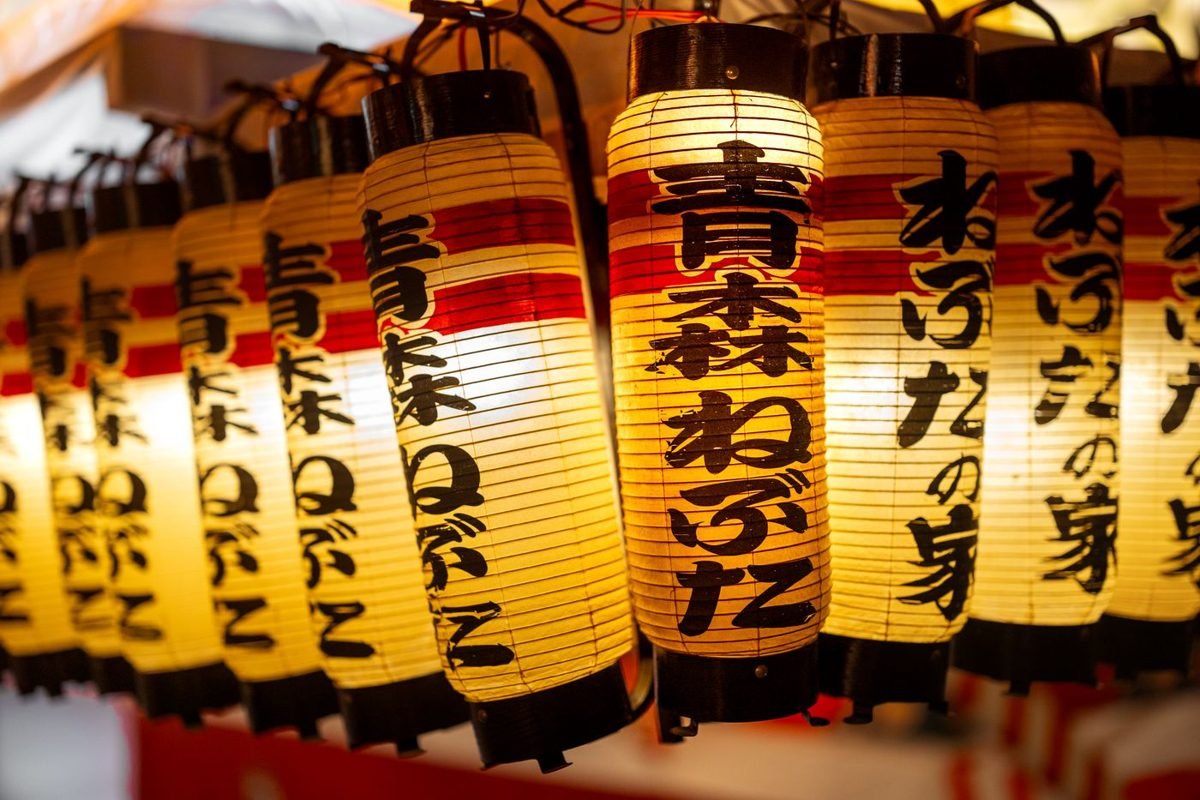
Aomori rewards visitors with a genuine variety of experiences: world-class prehistoric heritage, one of Japan’s most dramatic festivals, a natural gorge that ranks among the finest woodland walks in the country, and a landscape shaped by volcanic activity. Outside the city itself, several excellent day trips extend the possibilities further. Here are the 15 best things to do in and around Aomori.
1. Nebuta Museum WA RASSE
The WA RASSE museum on the Aomori waterfront (¥620) houses the most impressive of each year’s Nebuta festival floats in a permanent gallery. These enormous paper-and-wire constructions - typically 7 to 9 metres tall and wide - depict legendary warriors, historical scenes, and mythological figures in intense colour, lit from within by fluorescent tubes. The detail of the wire armatures and the hand-painted paper surfaces is most apparent in a static museum context, where you can walk close to elements that blur at parade speed.
The museum covers the full history of the Nebuta tradition, explains the construction process (each float takes months and involves specialist craftsmen), and includes audio-visual presentations of past parades. Even visited outside festival season, this is one of the most visually striking museum experiences in Tohoku.
2. Sannai-Maruyama Jomon Village
The Sannai-Maruyama UNESCO site (free main entry) preserves and reconstructs a settlement occupied for approximately 1,700 continuous years between 3,900 BCE and 2,200 BCE. Walk through reconstructed pit dwellings (semi-subterranean with thatched roofs), a 32-metre communal longhouse, elevated storage buildings, and - most memorably - the six-pillar structure rebuilt to its estimated height of 15 metres.
The on-site museum displays pottery, figurines (dogu), lacquerware, and tools in excellent condition. The quality of lacquerwork produced here 5,000 years ago - found preserved in the wet soil - is genuinely startling. Allow 90 minutes to two hours. The site is 30 minutes by bus from Aomori Station (¥280), closed Tuesdays.
3. Aomori Museum of Art
The Aomori Museum of Art (¥510) holds one of Japan’s most interesting collections outside the major metropolitan institutions. The primary draw is Nara Yoshitomo’s body of work, including several large-scale paintings and the famous Aomori Dog - a white dog sculpture approximately 8.5 metres tall that stands in the outdoor court. The museum also displays all four of Marc Chagall’s monumental stage sets for the Aleko ballet (1942), each around 8 metres wide.
The Jun Aoki-designed building is architecturally distinguished, with indoor spaces that reference the pit dwellings of the adjacent Sannai-Maruyama site. The museum and Sannai-Maruyama are within a few hundred metres of each other - combining both in a single half-day excursion is the most efficient approach.
4. Hirosaki Castle and Cherry Blossoms Day Trip
Hirosaki Castle (JR Ou Line, 40 minutes from Aomori, ¥330; castle admission ¥320) is one of only twelve original castle keeps remaining in Japan and the finest in Tohoku. Built in 1611, the three-storey tower sits in a park of 2,600 cherry trees around a moated perimeter. In late April and early May, the cherry blossoms produce the most celebrated sakura display in northern Japan - fallen petals floating on the moat below the castle’s reflection have become one of the iconic images of Japanese spring.
Outside blossom season, the castle remains worth visiting for its original Edo-period architecture and the autumn foliage (late October to early November). The castle town of Hirosaki itself has preserved Western-style Meiji-era buildings, Tsugaru Neputa festival floats (a local variant of the Nebuta tradition, displayed year-round at the Tsugaru-han Neputa-Mura cultural centre, ¥600), and the Hirosaki Brewing Company for local craft apple cider.
5. Oirase Gorge Full-Day Walk
The 14-kilometre riverside gorge trail from Yakeyama to Nenokuchi on Lake Towada is one of the finest walks in Tohoku. The Oirase Stream descends through old-growth beech and maple forest, passing more than a dozen named waterfalls - Choshi-no-taki, Kumoi-no-taki, Ashura-no-nagare among them - as well as mossy boulders, clear pools, and stretches of smooth-flowing river over flat rock.
The peak autumn season (mid-October to early November) when the canopy turns red and gold is the most dramatic time, though the gorge is lush and beautiful in summer green as well. Buses from Aomori cover the route seasonally (approximately ¥1,500 one-way to Yakeyama trailhead, 1h30m). For a partial walk, the 5-kilometre section between Shirogami-no-taki and Nenokuchi passes the main waterfalls and takes approximately 1.5 hours.
6. Lake Towada Boat Cruise
Lake Towada (accessible by bus from the upper end of the Oirase Gorge trail) is a caldera lake 326 metres deep with exceptional water clarity. A boat cruise between Towada-ko village and Nenokuchi (¥1,400 one-way, ¥2,000 return, 60 minutes) crosses the lake surface with views of the forested caldera walls rising on all sides. The lake has no visible human development along its shores except the small resort village - the surrounding wilderness is protected as Towada-Hachimantai National Park.
7. Towada Art Center
The Towada Art Center in the town of Towada (25 minutes by bus from the lake, ¥500 entry) is a contemporary art space that has commissioned large-scale permanent works from internationally significant artists. Chiharu Shiota’s room-filling thread-and-object installations, Ron Mueck’s hyperrealist sculpture, and works by Yoshitomo Nara and Yayoi Kusama are among the permanent collection. The outdoor art trail along the adjacent shopping street is free.
8. Tsugaru Shamisen Live Performance
The Tsugaru Shamisen is a three-stringed plucked instrument with an unusually aggressive playing style - fast, percussive, technically demanding - developed in the Tsugaru region (western Aomori) among itinerant blind musicians in the Edo and Meiji periods. Today it is the defining traditional music form of Aomori and has been popularised nationally by performers including the Yoshida Brothers.
Live performances (¥800–¥2,000 at dedicated venues, evening shows) are available at the Tsugaru-han Neputa-Mura cultural centre in Hirosaki and at several venues in Aomori city. The instrument’s sound in live performance - an aggressive, driving rhythm with highly ornamented melodic lines - is different from anything else in traditional Japanese music.
9. Tsugaru Woodcraft at Kuroishi Itayazaiku Museum
Kuroishi city (1 hour from Aomori by JR) is the centre of Tsugaru Itayazaiku, a traditional woodworking style using maple and cherry wood bent and carved into trays, containers, and decorative objects. The Itayazaiku museum (¥300) demonstrates the production process and displays historical examples; craftsmen work on-site and produce objects for purchase. The town also has a well-preserved traditional townscape (komise arcade street) and several onsen.
10. Apple Picking in Hirosaki Orchards
From late September through October (Fuji variety peak around mid-October), orchards in the hills outside Hirosaki open for pick-your-own apple experiences. Entry typically costs ¥500–¥1,500 with a quantity allowance included; additional apples are purchased by the kilogram (Fuji ¥800/kg, Mutsu ¥700/kg, Orin ¥750/kg). The experience is casual and relaxed - walk between trees, sample varieties, and take home a bag of just-picked fruit.
Tourism Aomori (accessible from Hirosaki tourist office) has an updated orchard list each autumn with open dates and prices.
11. Owani Onsen
The hot spring town of Owani (1 hour by JR from Aomori, ¥590) sits in a mountain valley south of the city. It is a small, traditional resort - fewer facilities and visitors than major Tohoku onsen like Naruko or Ginzan, but atmospheric for exactly that reason. Day-use access at the Owani Onsen Bath facility costs ¥500 (9:00am–4:00pm). The water is a sodium-calcium chloride spring with a reputation for improving blood circulation.
12. Blue Pond Aoike Day Trip (Hokkaido Extension)
The famous Blue Pond in Biei, Hokkaido - its intense turquoise colour caused by aluminium hydroxide colloids suspended in the water - is technically outside Aomori Prefecture, requiring a journey north via the Seikan Tunnel. From Aomori: Hokkaido Shinkansen to Asahikawa (2h30m), then bus to Biei and local transport to the pond. Entry is free; the pond is most vivid on overcast days when sunlight does not compete with the reflected colour. A long day trip from Aomori is possible but an overnight in Hokkaido is more practical.
13. Osorezan Volcano Crater Lake
Mt Osorezan (“Dread Mountain”) in the Shimokita Peninsula is one of Japan’s three sacred gateways to the afterlife, alongside Koya-san and Hiei-zan, in traditional Buddhist cosmology. The site occupies the caldera of an active volcanic complex - sulphurous gases vent from the ground, the soil is barren and grey, and the caldera lake (Lake Usori) has a striking blue-green colour from volcanic acidity. The contrast between the desolate volcanic landscape and the temple buildings and monuments placed within it is deeply strange.
Entry to the temple grounds is free (Bodaiji temple onsen bath ¥500). Access from Aomori requires JR to Shimokita Station (1h55m, ¥1,910), then bus or taxi to Mutsu, then the seasonal Shimokita Kotsu bus to Osorezan (35 minutes). The site is closed November to April. Local female shamans (itako) traditionally gather here during summer festivals to communicate with the dead.
14. Tappi Saki Cape
Tappi Saki, at the northernmost tip of Honshu, is the point from which Tsugaru Strait to Hokkaido is closest - approximately 19 kilometres of open water. The cape is reached by bus from Kanita Station (2 hours) and consists of wind-battered cliffs, a lighthouse, and the entrance shaft of the Seikan Tunnel (visible as an industrial structure at sea level). The experience is primarily one of geographical extremity - standing at the end of the main island with the sea visible on three sides and Hokkaido a blue silhouette on the horizon on clear days.
Book ahead for popular experiences: Tours and activities in Aomori include guided options, skip-the-line tickets, and immersive cultural experiences.
15. Aomori Gyosai Center Morning Market
The Aomori fish and produce market (open 5:00am–3:00pm) is in the covered arcade immediately north of Aomori Station. Fresh seafood from Mutsu Bay and the Pacific - scallops, sea urchin, flatfish, and seasonal catches - is sold by approximately 50 vendors. Several stalls have small counter seats where fresh seafood rice bowls (kaisen-don, ¥1,500–¥2,500) are served from early morning. The scallop in particular - Aomori is one of Japan’s top scallop producers - is exceptional eaten raw or grilled at the market immediately after purchase.
Where to stay: Search hotels in Aomori on Booking.com
See also: Aomori travel guide · Where to stay in Aomori · Best restaurants in Aomori · Day trips from Aomori · Tohoku region guide