Hokkaido is large and its rail network is significantly thinner than the rest of Japan. In practical terms this means that a rental car is often the best tool for anyone venturing beyond Sapporo and the main JR trunk lines. The island is scenic, the roads are well-maintained, and distances that look enormous on a map are manageable with a car. Here is how to approach each major area.
Getting to Hokkaido
By plane: The standard approach for international visitors. New Chitose Airport (CTS), 40 minutes by train from Sapporo, is the main gateway. Flights from Tokyo (Haneda or Narita) take approximately 1 hour 30 minutes and cost approximately ¥8,000–25,000 one way depending on how far in advance you book. ANA and JAL serve the route most frequently; Peach and Jetstar offer budget options with fewer dates.
Hakodate Airport (HKD) handles flights from Tokyo and some Kansai routes; it is the entry point if Hakodate is your first Hokkaido destination.
By Shinkansen: The Hokkaido Shinkansen from Tokyo to Shin-Hakodate-Hokuto takes approximately 4 hours (¥22,690 reserved, or covered by JR Pass). From Shin-Hakodate-Hokuto, a limited express train continues to Sapporo - but this connection is slow (currently 3.5 hours), making the train unrealistic for Tokyo–Sapporo at roughly 8 hours total versus 1.5 hours by plane. The Shinkansen extension to Sapporo is under construction but will not open before 2030.
Sapporo Transport
Within Sapporo, the subway system covers all the main visitor areas. There are three lines:
- Namboku Line (green): Odori ↔ Susukino ↔ Nakajima Park
- Tozai Line (orange): Odori ↔ Maruyama Koen ↔ Miyanosawa
- Toho Line (light blue): Odori ↔ Higashi-Sapporo
A single subway ride costs ¥210–370. The 1-day subway pass (¥830) covers all three lines and is worth buying if you plan 3+ rides in a day. A compatible IC card (SAPICA, Suica, or Kitaca) is accepted on the subway and also on Sapporo city buses and trams.
The Sapporo streetcar (tram) runs a loop circuit through the Susukino area; ¥200 flat fare per ride, or ¥500 for an all-day pass. Useful for reaching Nakajima Park and the surrounding Maruyama neighbourhood without a metro change.
From Sapporo: Trains vs. Rental Car
The JR Hokkaido network covers the main trunk routes adequately but has been dramatically cut back in recent years due to low ridership on rural lines. Key rail connections that still work well:
Sapporo → Hakodate: Super Hokuto limited express, 3.5 hours, approximately ¥8,910 reserved. Covered by JR Pass and Hokkaido Rail Pass.
Sapporo → Asahikawa: Kamui or Lilac limited express, 1.5 hours, approximately ¥4,290 reserved. The gateway to Furano (further 50 minutes by JR Furano Line from Asahikawa, ¥1,070).
Sapporo → Obihiro: Super Tokachi limited express, approximately 2 hours, ¥5,810 reserved. Gateway to the Tokachi Plains.
Routes that no longer exist by direct rail and require buses or cars: Sapporo → Niseko (bus only since the Hakodate Honsen branch closed), Sapporo → Shiretoko (bus and ferry from Abashiri or Kushiro - allow a full day).
The Hokkaido Rail Pass
Issued by JR Hokkaido, the rail pass covers all JR Hokkaido limited express trains, including the Super Hokuto, Kamui, Tokachi, and Ozora. Not valid on Shinkansen but covers the conventional rail network within Hokkaido.
- 3-day pass: ¥16,500 (adult)
- 5-day pass: ¥22,000
- 7-day pass: ¥24,500
- All Hokkaido 5-day pass: ¥24,500 (includes Shinkansen portion Shin-Hakodate-Hokuto to Hakodate)
The pass is worthwhile if you plan to do Sapporo–Hakodate–Asahikawa–Furano by JR. For a Sapporo + Niseko + Furano itinerary, it is less useful since Niseko requires a bus.
Highway Buses to Niseko and Furano
Sapporo → Niseko (Grand Hirafu): Hokkaido Chuo Bus and Donan Bus operate multiple daily services in ski season and reduced services in summer. The journey takes approximately 2.5–3 hours and costs ¥2,800–3,500 one way. Book in advance online for the ski season - popular morning departures (7–8am) sell out by early December.
Sapporo → Furano: JR is generally preferable (see above via Asahikawa). Direct highway bus services also run from Odori Bus Terminal, taking approximately 2.5 hours and costing ¥2,000.
New Chitose Airport → Niseko: Direct seasonal shuttle buses (2–2.5 hours, approximately ¥2,800–3,500) are operated during ski season and summer peak. This is the most efficient airport connection for Niseko-bound visitors who don’t need Sapporo.
Rental Cars: The Right Tool for Hokkaido
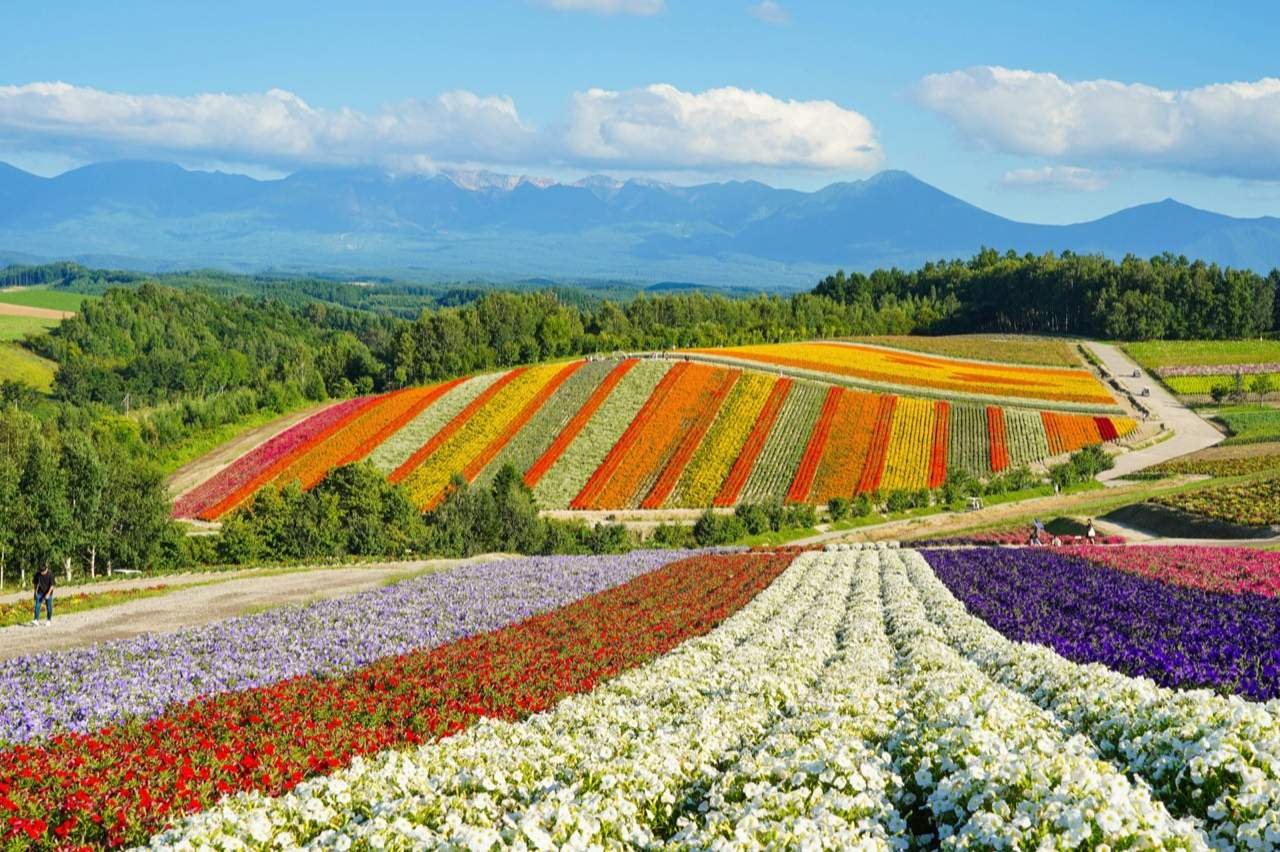
Outside Sapporo and the major rail corridors, renting a car transforms the trip. The Biei patchwork hills, Daisetsuzan trailheads, Shiretoko Peninsula roads, and lavender farm clusters are all best explored by car.
Cost: Compact car from approximately ¥5,500–8,000/day in summer, ¥7,000–10,000/day in winter (winter tyres are standard issue in Hokkaido from November to April). Major rental companies (Toyota Rent-a-Car, Nippon Rent-A-Car, Times Car) operate from New Chitose Airport; it is the most practical pickup location for island-wide driving itineraries.
Driving in winter: Snow and ice are guaranteed from late November to March. Rental cars come with studded or all-season tyres as standard. Drive slowly, brake early, and treat any rural road at night as potentially icy even when it looks dry. International driving permits are required for non-Japanese licence holders.
Petrol: Available throughout Hokkaido including in rural areas. Full-service petrol stations become less frequent in Shiretoko and eastern Hokkaido - fill up at every opportunity. Approximately ¥170–185/litre as of 2026.
Practical Tips
Allow more travel time than the map suggests. Hokkaido roads are fast and well-maintained in summer but distances are long. The Sapporo–Shiretoko drive, for example, takes approximately 5.5–6 hours with stops; most visitors split it over two days. Plan Hokkaido trips in terms of regions (western/Sapporo, central/Furano, eastern/Shiretoko) rather than trying to cover the whole island in one loop.
Once the transport is sorted, see what to do in our best things to do in Hokkaido guide, and book a base from our where to stay in Hokkaido guide.
This page is part of our wider Hokkaido region guide, which covers the main cities and sights.