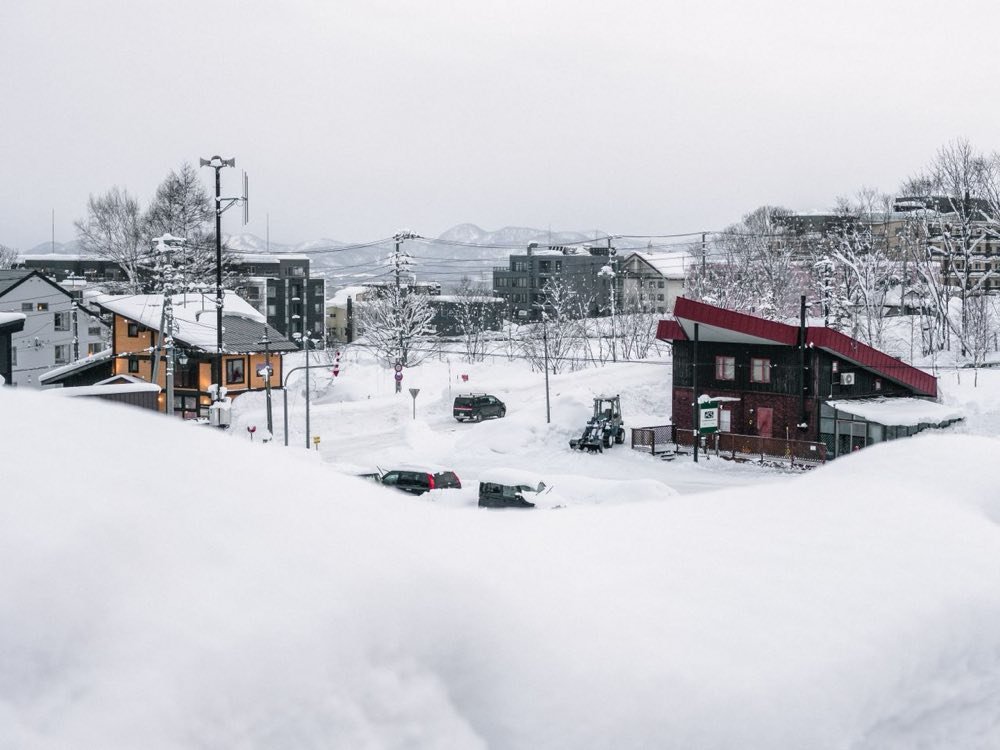
Niseko is remote by Japanese standards. There is no train station in the resort villages, no shinkansen, and the nearest major airport is New Chitose, around 100 km away. The good news is that the route is well organised: ski buses, private transfers and hire cars all run to Hirafu, and once you arrive the layout is compact. This page covers every way to get from the airport to your lodge, and how to move between the four resorts once you are there. For where to base yourself, see our Niseko accommodation guide, and for the bigger picture see the Niseko travel guide.
Niseko transport costs at a glance (as of 2026):
| Item | Detail | Cost |
|---|---|---|
| Direct ski bus, airport to Hirafu | Winter only, roughly 2.5 to 3.5 hours; fare as of the 2025-26 season | ¥4,000-¥5,500 each way |
| Private transfer | Door to door, best split among four or more | Quoted per vehicle |
| Taxi within Hirafu | Short hop; book late-night returns ahead | Under ¥2,000 |
| Taxi, Hirafu to Annupuri or Niseko Village | Limited at night in peak weeks | A few thousand yen |
New Chitose Airport to Niseko
New Chitose Airport (CTS) serves Sapporo and most of southern Hokkaido, and it is the airport nearly every Niseko skier uses. Flights from Tokyo Haneda take about 1h45m, and there are direct international services from several Asian cities. Journey time to Hirafu is roughly 2.5 to 3.5 hours by road, depending on snow, traffic and the number of stops. Plan for the longer end of that range in a storm. Our Chitose Airport transfer guide covers the airport itself, including luggage forwarding and the train to Sapporo.
Option 1: Direct ski bus
Several winter-only bus services run from the international and domestic terminals to Hirafu, Niseko Village, Annupuri and Hanazono, including the Hokkaido Resort Liner and operators such as Donan Bus and Chuo Bus. They run in the ski season, typically from early December to late March. Fares were roughly ¥4,000 to ¥5,500 each way as of the 2025-26 season, with reductions for children. Tickets can usually be booked online ahead, which is wise from late December through February when departures fill up. Ski and snowboard bags travel in the hold, often for a small fee.
This is the best value if you are travelling solo or as a couple. The drawback is fixed departure times: a delayed flight can cost you a seat, so book a flexible ticket or leave a buffer.
Option 2: Private transfer
For groups, families or anyone arriving late, a private transfer is worth the money. A private airport transfer from Chitose to Niseko runs door to door in a minivan with room for ski gear, and the price is shared across passengers. Expect several times the per-person bus fare, which is why four or more people make it competitive. You can also compare options with Welcome Pickups, which offers pre-booked meet-and-greet transfers in Japan.
Check the vehicle size when you book. Four skiers with full bags and boards will not fit in a standard sedan.
Option 3: Hire car
Collect a rental at the airport and drive about two hours in good conditions via the Hokkaido expressways and Route 5. Car hire in Japan gives you flexibility to reach Rusutsu, Lake Toya and Otaru, and to move luggage easily between lodgings. Practical notes:
- Winter tyres are fitted as standard on Hokkaido rentals in the snow season, but chains are rarely needed.
- Drive on the left, slow down on bridges and shaded sections, and leave much more braking distance than you expect. Black ice is the real hazard.
- Heavy snow can close sections of road with little warning. Check the JARTIC or Hokkaido road information sites before you leave.
- Many Niseko lodges have limited parking. Confirm a space when you book.
If you have never driven in deep snow, take the bus. The savings from a rental disappear if you spend an hour digging out a car.
Option 4: Train via Sapporo or Otaru
The JR route is the cheapest in direct fare terms but the slowest in practice. From the airport you take the rapid train to Sapporo (about 37 minutes), then connect toward Otaru and Kutchan on the Hakodate Main Line. Local services are infrequent and trains between Otaru and Kutchan can be crowded or cancelled in heavy snow. From Kutchan Station you still need a taxi or local bus for the last 10 to 15 minutes to Hirafu. Only choose this if you are already in Sapporo for a night, or are travelling on a rail pass and want to avoid paying bus fares. Check current timetables before you plan the connection.
Moving Between the Four Resorts
Niseko United is four linked resorts - Grand Hirafu, Hanazono, Niseko Village and Annupuri - on the same slope of Mount Yotei. In winter a free shuttle bus links them for people with a lift pass, running roughly every 30 minutes through the ski day. It is fine for the occasional hop, but slow if you want to change resorts every morning.
- Hirafu to Hanazono: a short ride or about 15 minutes’ walk. The Hanazono lift connection is the quickest way across.
- Hirafu to Annupuri: best covered by the connected lifts at the top of the mountain, or by shuttle.
- Niseko Village: the most self-contained, with its own gondola and on-site shuttle.
Taxis are available but limited in peak weeks, and many restaurants and bars will phone one for you. Some local operators also run evening shuttles in the Hirafu area for diners. In the village, walking is easy once you are at your lodge, but snowbanks and icy pavements slow everyone down, so bring boots with grip, not trainers.
Ride Planning Tips
- Book the bus early for departures between 24 December and mid-February.
- Carry a day bag with passport, medication and dry layers - your main bag may be stored in the hold for hours.
- Allow buffer on departure day. Weather delays on the road to the airport are common, and flights cancelled in a storm are hard to rebook. Aim to reach the airport at least 4 hours before an international flight.
- Check the official resort site for current shuttle routes and lift-pass rules at Niseko United.
When you are ready to explore beyond the airport run, read our Niseko things to do page and the Niseko day trips guide. Sorting out a data connection before you land is easy with a Japan eSIM, and travel insurance with winter-sports cover is essential for any ski trip.