Kagoshima Travel Guide: Sakurajima, Black Pork & Yakushima
Complete guide to Kagoshima - active Sakurajima volcano, Sengan-en garden, black Berkshire pork, shochu distilleries, and gateway to Yakushima island.
Guides for Kagoshima
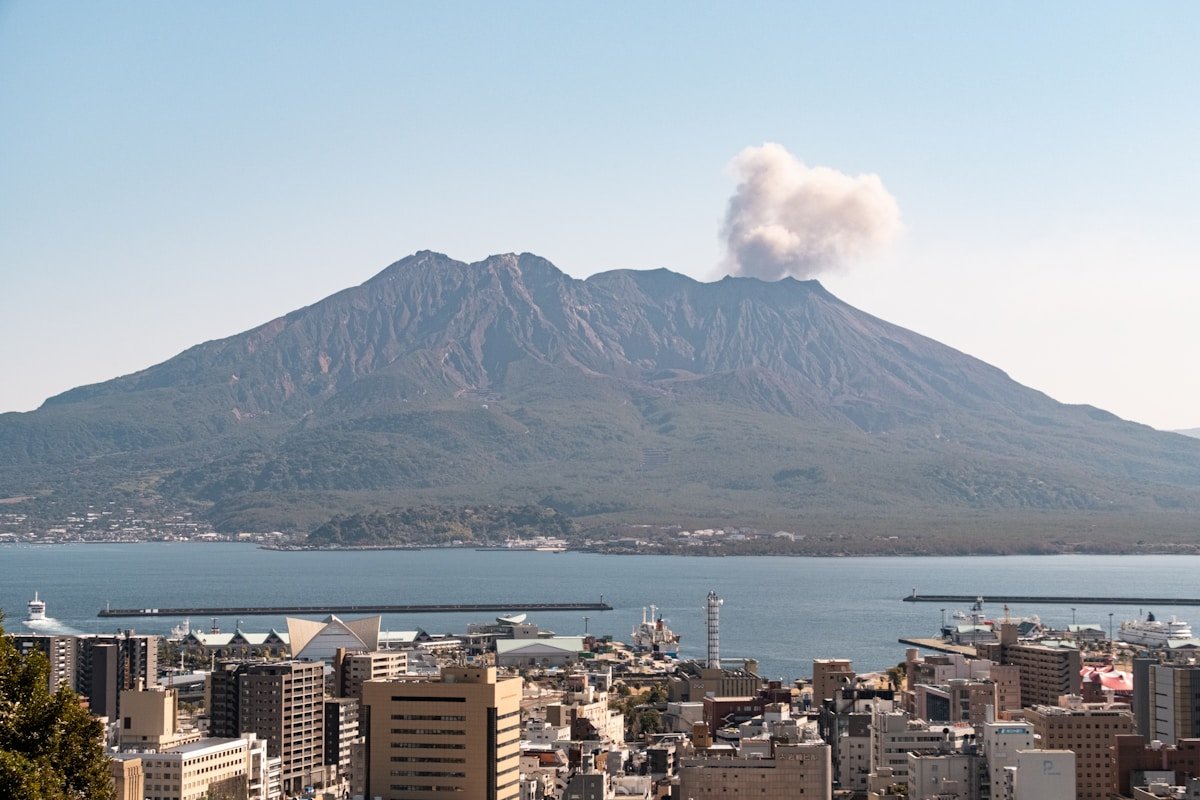
Kagoshima is the southernmost major city of Kyushu and one of Japan’s most dramatically situated urban centres - a city of approximately 600,000 people living across the bay from an active volcano that dusts the streets with fine ash on an average of 100 days per year. Sakurajima, the volcano that dominates the eastern horizon from every point in the city, erupts hundreds of times annually in small bursts visible from the Kagoshima waterfront. Residents carry compact umbrellas not for rain but for ash, and school sports days are cancelled when ash cloud conditions are unsuitable.
Kagoshima was the capital of the Satsuma domain - one of the most powerful and autonomous feudal territories in pre-Meiji Japan. The Shimadzu clan ruled Satsuma continuously for approximately 700 years until the Meiji Restoration, longer than any other Japanese feudal family. Kagoshima’s connection to that restoration is direct: Saigo Takamori, the historical figure who has been called “the last samurai,” was born here, died here in the Satsuma Rebellion of 1877, and remains an almost mythological figure in the city’s self-understanding.
Sakurajima Volcano
Sakurajima is the defining visual fact of Kagoshima - a steep volcanic cone rising 1,117 metres from the bay, visible from every elevated point in the city and from the waterfront in its entirety. The volcano is connected to the Osumi Peninsula by a lava field created during a catastrophic 1914 eruption that produced a lava flow so large it filled the previously open channel between the island and the mainland.
The ferry from Kagoshima Port (¥160 round trip - effectively the cheapest significant sea crossing in Japan) runs 24 hours a day, every 15 minutes during daytime, carrying Sakurajima’s 4,000 residents (and their cars, trucks, and buses) back and forth. The 15-minute crossing gives views of the volcano from the water and provides the most used public service in Kagoshima.
On the island, a bus circuit (¥500/day pass) covers the main points:
- Yunohira Observation Deck (free): At 373 metres, the highest point accessible by road, with views back to Kagoshima city and across the bay.
- Arimura Lava Observation Area (free): A 1-kilometre walking path across the 1914 solidified lava field to a lookout point above the lava coast.
- Fureai Sakurajima Foot Bath (¥100): A public foot bath beside the coastal road, using volcanic hot spring water.
- Sakurajima Visitor Center (free): Information centre with volcano monitoring displays, including a live seismograph and ash fall records.
The volcano’s eruptions are usually small (ash columns, tremors, occasional larger bursts) and visible from the observation points as smoke and ash rising from the active vents on the north face. The most dramatic viewing opportunities occur at night when eruptions illuminate from within.
Guided Sakurajima volcano tours operate from Kagoshima city, combining the ferry crossing with stops at the main observation decks - useful for understanding the volcano’s active monitoring system and the 1914 eruption that connected the island to the mainland.
Sengan-en Garden
Sengan-en (¥1,000) is the garden estate of the Shimadzu clan, built in 1658 and maintained by the family continuously until the present day. The garden’s design uses Sakurajima as its borrowed scenery (shakkei) - the entire composition is oriented to frame the volcano across the bay as the garden’s backdrop. The effect is striking: the carefully controlled foreground of pruned pines, stone arrangements, and bamboo groves gives way to the bay and then the volcano behind it.
The estate includes the Izumi Residence (museum), a traditional teahouse where tea ceremony can be booked (¥700 additional), a workshop building associated with Shimadzu clan’s remarkable industrial history, and the Shokokan Museum. The garden complex is a UNESCO World Heritage component as part of the “Sites of Japan’s Meiji Industrial Revolution” - the Shimadzu clan built Japan’s first Western-style reverberatory furnace (for cannon production) and various industrial works within the estate grounds in the 1850s.
Opening hours: 8:30am–5:30pm daily.
Shiroyama Park and Saigo Takamori
Shiroyama - “Castle Mountain” - is a forested hill 107 metres above the city centre, accessible by a short walk or by bus (approximately 15 minutes from Kagoshima-Chuo Station). The Shiroyama Observation Deck (free) at the summit provides the best panoramic view of Kagoshima, the bay, and Sakurajima from within the city.
The cave in the hillside below the observation point is where Saigo Takamori died on September 24, 1877 - wounded and facing defeat in the Satsuma Rebellion, he was carried here by his followers and died (possibly by assisted suicide) as imperial forces closed in. The cave (free to view) is small and unadorned; its significance is entirely historical. A larger-than-life bronze statue of Saigo Takamori in military dress stands at the base of the hill near the entrance to the Terukuni Shrine.
Saigo Takamori’s story - a man who fought for the Meiji Restoration and was then destroyed by it when he chose to lead a rebellion against the government he helped create - has made him a permanent hero in Kagoshima regardless of political period.
Kagoshima City Museum of the Meiji Restoration
The Meiji Restoration Museum (¥300, Korinkan building) covers the Satsuma domain’s critical role in the overthrow of the Tokugawa shogunate and the subsequent Meiji period industrialisation. The exhibits include the stories of the Satsuma students smuggled abroad to Britain (1865) to study technology and naval science - a direct violation of the sakoku laws then theoretically still in effect - whose knowledge helped drive Japan’s industrial revolution. Interactive displays (some with English support) cover the period through to the 1877 Satsuma Rebellion.
Kurobuta Black Pork
Kagoshima’s Berkshire pig breed (kurobuta, literally “black pig”) is the premium pork product of southern Japan. The animals are raised on a traditional diet including sweet potato and undergo a longer growth period than commercial breeds, resulting in more intramuscular fat, darker colour, and richer flavour. The most common presentations:
Tonkatsu (breaded cutlet, ¥1,500–¥2,000): The simplest and most accessible format - thick pork cutlet in panko breadcrumbs, fried, sliced, and served with shredded cabbage, rice, miso soup. Kumasotei and Tonkatsu Misono near Tenmonkan are the two most recommended specialist restaurants.
Shabu-shabu hot pot (¥3,000–¥5,000/person): Thin-sliced pork swirled in hot broth, dipped in sesame sauce. The marbling visible in the raw slices dissolves in the hot liquid, coating the noodles and vegetables. Best at Kagoshima’s dedicated shabu-shabu restaurants.
Satsuma Shochu
Kagoshima produces Japan’s most distinctive style of shochu - Satsuma Shochu, made from sweet potato (imo-jochu), a spirit specific to the region and protected as a geographic indication. The sweet potato character gives the spirit an earthy, rounded richness quite different from the grain-based shochu of other Japanese regions. Kagoshima has the highest per-capita shochu consumption in Japan by a significant margin - it is drunk in virtually every izakaya and restaurant in the city, usually diluted with water (mizu-wari) or on the rocks.
Major distilleries in and around Kagoshima offer tours and tastings: Satsuma Shuzo in Makurazaki (2 hours south by bus), Hamada Shuzo in Izumi (accessible by JR), and Nishi Shuzo (various options). Many tours are in Japanese with limited English; booking ahead is recommended.
Getting to Kagoshima
From Fukuoka (Hakata): Kyushu Shinkansen (Mizuho or Sakura service) to Kagoshima-Chuo, approximately 1 hour 20 minutes, ¥10,750 reserved. The fastest and most practical option.
From Osaka (Shin-Osaka): Shinkansen approximately 3 hours 55 minutes, ¥21,250 reserved.
From Tokyo: Shinkansen approximately 7 hours via Osaka, or fly from Haneda to Kagoshima Airport (1h50m, from ¥12,000). Flying is significantly faster and often comparable in price.
Once you are in town, our guide to getting around Kagoshima covers trams and ferries in more detail.
Kagoshima’s Ohara Matsuri dance parade takes place each November. See our Ohara Matsuri event guide for dates and viewing tips.
Getting Around Kagoshima
Kagoshima has a single tram (streetcar) line running north-south through the city centre (¥170/ride, ¥600/day pass). A 1-day sightseeing bus (City View Bus, ¥190/ride, ¥600/day pass) covers the major tourist sites including Sengan-en, Shiroyama, the aquarium, and the ferry port to Sakurajima.
Planning your trip to Kagoshima? Tours and activities in Kagoshima cover guided experiences, cultural immersion, and the top sights with local expertise. Flights to Japan vary significantly by season - compare early to secure the best fares. Sort out travel insurance for Japan before you book, and pick up an Airalo eSIM for Japan to have mobile data the moment you land.
Search hotels in Kagoshima on Booking.com
Explore Kagoshima
Things to do in Kagoshima · Where to stay in Kagoshima · Day trips from Kagoshima · Getting around Kagoshima
Kagoshima is the southernmost major city on Kyushu. For an overview of the island, see our Kyushu region guide. Planning a route through southern Japan? The Kansai and Kyushu itinerary covers the full journey from Osaka to Kyushu.
Official sources worth checking before you go: Japan National Tourism Organization, Ministry of the Environment national parks pages.
See also: Kyushu region guide · Kagoshima food guide · Fukuoka travel guide · Beppu travel guide · Kansai and Kyushu itinerary · Japan in August · Onsen guide Japan · Long stay in Kagoshima
Upcoming Events in Kagoshima
Ohara Matsuri
kagoshima
Ohara Matsuri 2026, 2–3 Nov. Twenty thousand in yukata perform Ohara-bushi and Iso Ondori dances along Kagoshima's main street. Free to watch.
Hatsumode - New Year Shrine Visits
Hatsumode 2027, 1–3 January. Japan's most important annual tradition - millions visit shrines and temples in the first three days of the new year.
Nearby Cities
Frequently Asked Questions
- How do I get to Kagoshima from Fukuoka?
- The Kyushu Shinkansen from Hakata to Kagoshima-Chuo takes approximately 1 hour 20 minutes for around ¥10,750 reserved. This is the fastest and most comfortable option. Highway buses take approximately 3 hours 30 minutes and cost ¥3,000 to ¥4,000.
- Is Sakurajima an active volcano?
- Yes. Sakurajima is one of Japan's most active volcanoes, producing hundreds of small eruptions per year. Most are minor ash emissions rather than explosive events. The city of Kagoshima monitors the volcano continuously; evacuation plans are in place and the ferry service operates 24 hours so residents can leave quickly. The ash falls on Kagoshima city approximately 100 days per year.
- What is kurobuta black pork?
- Kurobuta is the Berkshire pig breed raised in Kagoshima Prefecture. The meat has more marbling and a richer flavour than standard pork due to the breed's genetics and traditional Kagoshima feeding methods. Kurobuta tonkatsu (breaded cutlet) costs ¥1,500 to ¥2,000 at specialist restaurants; shabu-shabu hot pot runs ¥3,000 to ¥5,000 per person.
- What is shochu and how is it different from sake?
- Shochu is a distilled spirit (25 to 35% ABV) while sake is brewed (14 to 16% ABV). Kagoshima produces Satsuma Shochu using sweet potato (imo-jochu), a style specific to the region. The sweet potato character gives it an earthy richness quite different from the grain-based shochu of other regions. Kagoshima has the highest per-capita shochu consumption in Japan.
- Can I visit Yakushima as a day trip from Kagoshima?
- Technically yes, but barely practical. The Toppy high-speed ferry takes 1 hour 55 minutes each way (¥5,840 one-way), leaving only 2 to 3 hours on the island. The island's key experiences - hiking to Jomon Sugi and Shiratani Unsuikyo - require full days. An overnight stay on Yakushima is strongly recommended.
Book an experience
Top experiences in Kagoshima
Explore the best tours and activities in Kagoshima, with instant confirmation and free cancellation on most bookings.