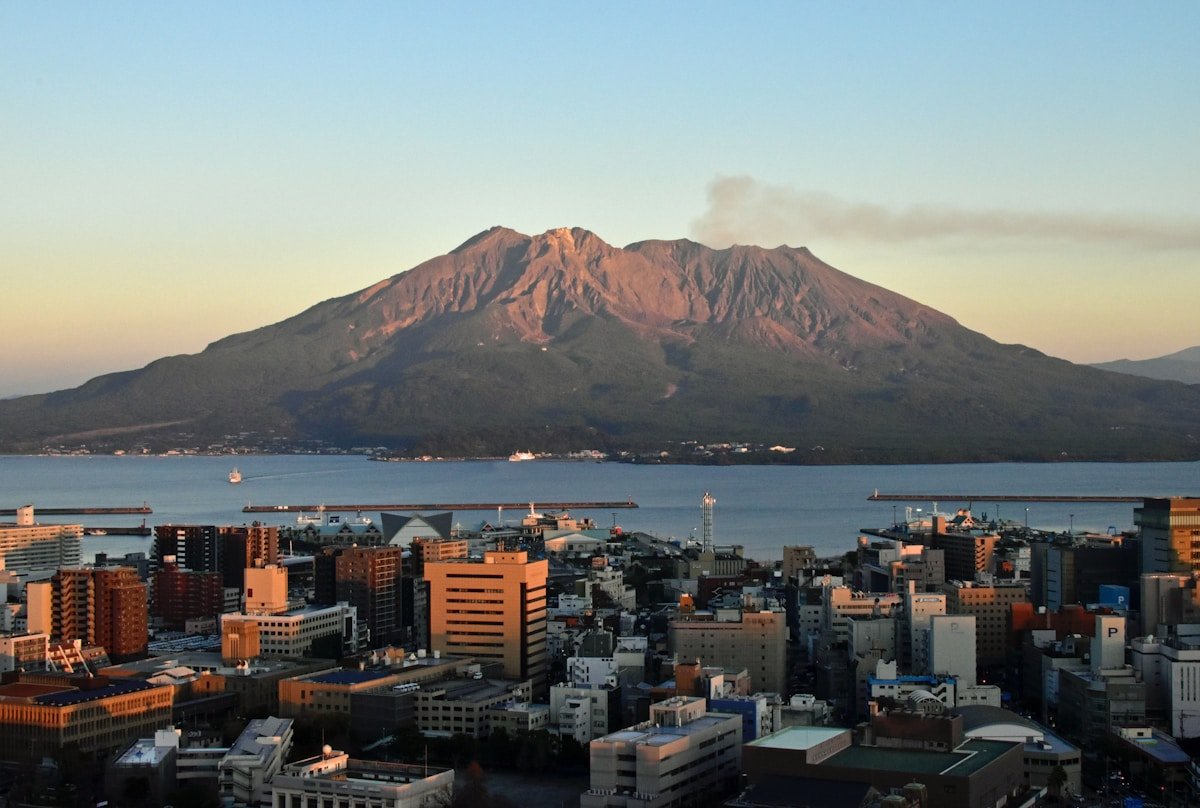
Kagoshima delivers a remarkable variety of experiences concentrated in a manageable city with excellent transport connections to the surrounding region. The volcano is an active presence across the bay at all times; the samurai history is layered through the parks, museums, and place names; and the food culture around black pork and sweet potato shochu is genuinely distinctive. Here are the 16 best things to do.
1. Sakurajima Ferry Crossing
The ferry to Sakurajima (¥160 round trip, every 15 minutes, 24 hours) is the most striking cheap transport experience in Japan. The 15-minute crossing gives unobstructed views of the volcano rising from the bay - the ash plumes visible on active days, the dark lava coastline visible as you approach, the entire northern face of the cone visible from the mid-bay position.
The ferry service exists primarily for the approximately 4,000 residents of Sakurajima rather than for tourists, which means that the usual Japanese ferry formality is absent - this is a commuter service, efficient and unsentimental. Vehicles are charged separately; foot passengers board freely and quickly.
2. Sakurajima Lava Coast Walk
The Arimura Lava Observation Area (free, on the island bus circuit ¥500/day) consists of a 1-kilometre walking path across the surface of the 1914 lava flow - grey-black solidified lava with the rough, ropey texture of pahoehoe formations, stretching from the base of the volcano to the sea coast. At the observation platform at the end of the path, you look back up the mountain’s southern face and down to the lava coastline where the 1914 flow entered the sea.
The 1914 eruption was one of the largest in 20th-century Japan: 3 billion tonnes of lava were ejected over several months, filling the strait between Sakurajima and the mainland. The solidified flow you walk on is that material.
3. Yunohira Observatory on Sakurajima
The highest accessible point on Sakurajima by road - 373 metres at Yunohira Observatory (free) - gives the best views back across the bay to Kagoshima city from the volcano’s flank. The road from the ferry terminal winds through citrus orchards (Sakurajima mikan, tiny mandarin oranges grown in the volcanic soil, are one of Japan’s finest) and past visible volcanic rock outcroppings. The observatory platform is small and simple; the view is worth the bus or taxi journey.
4. Volcanic Foot Bath at Sakurajima
At the Fureai Sakurajima natural foot bath (¥100) beside the coastal road on Sakurajima, you remove shoes and socks and soak feet in hot spring water heated by the volcanic geology below. The setting - open-air benches above a small foot bath pool, with the volcanic coast visible - is modest and relaxing. A good 20-minute stop during the island circuit.
5. Sengan-en Garden and Shokokan Museum
The Shimadzu clan’s garden estate (¥1,000) is designed around Sakurajima as borrowed scenery - the volcano provides the backdrop to the entire garden composition. Walking the garden paths with the volcano directly in view across the calm bay is one of the finest landscape compositions in southern Japan.
The Shokokan Museum within the estate covers the Shimadzu clan’s industrial history with particular focus on the reverberatory furnace built in 1852 - the first Western-style smelting facility in Japan - and the clan’s broader industrial and technological programme in the years before the Meiji Restoration. The tea ceremony at the garden teahouse (¥700 additional, 30 to 45 minutes) is available without reservation on most days.
Opening hours: 8:30am–5:30pm daily.
6. Shiroyama Observatory Sunset View
The Shiroyama observation deck (free, 107 metres above city, accessible by bus or 20-minute walk) is the best free viewpoint in Kagoshima - a panoramic sweep over the city, bay, and Sakurajima. The volcano is visible from here framed by the city below and the bay between. Sunset - Sakurajima against an orange sky - is the most dramatic timing; the observation area stays open until 10:00pm.
7. Saigo Takamori Statue and Cave
Saigo Takamori, who led the Satsuma Rebellion of 1877 and died here when imperial forces closed in, is commemorated by a large bronze statue near the Shiroyama base (free) and the small cave in the hillside where he made his final stand (free, 5 minutes from the statue). The cave is small and the interior is barely large enough for several people - the intimacy of the space, and the specific fact that this unremarkable hole in a cliff face is where a defining chapter of Japanese history ended, makes it quietly affecting.
Saigo Takamori’s image stands in almost every public space in Kagoshima - the city’s protective icon, regardless of the political complexity of his story.
8. Kagoshima Aquarium Ioworld
The Ioworld Kagoshima Aquarium (¥1,500, open 9:30am–6:00pm) is Japan’s second-largest aquarium by tank volume, with a whale shark (jindai-zame) as its central attraction. Whale sharks are among the largest fish on Earth, reaching up to 12 metres in length; only a small number of aquariums globally maintain them successfully in captivity. The main tank (8 metres deep, 13.5 million litres) also contains manta rays, various shark species, and large schooling fish. The aquarium is on the waterfront adjacent to the Dolphin Port shopping area, 10 minutes walk from the Sakurajima ferry terminal.
9. Iso Teien Museum and Meiji Heritage
The Iso Teien (Shokokan) Museum within Sengan-en (included with garden entry at ¥1,000) covers the Shimadzu clan’s technological innovations that became foundational for Japan’s industrialisation. The reverberatory furnace built in 1852 on the estate grounds - Japan’s first Western-style metal smelting facility - was used to produce cannons for coastal defence. Within a decade, similar technology spread across Japan and accelerated the industrial capability that enabled the Meiji period. The UNESCO designation covers this specific industrial heritage alongside several other Kyushu sites.
10. Kurobuta Tonkatsu Lunch
The kurobuta (Berkshire) pork tonkatsu at Kumasotei near Tenmonkan tram stop (¥1,500–¥2,000 for the standard set) is the most accessible introduction to Kagoshima’s black pork specialty. The cutlet - thicker than standard tonkatsu - is seasoned simply, coated in panko, and fried until the outside is deeply coloured and crisp while the interior remains juicy. The higher marbling of the Berkshire breed means the fat melts during frying, basting the meat from within.
The set includes shredded cabbage, rice, miso soup with Kagoshima pork-rib soup (tonkotsu-jiru, distinct from the Fukuoka ramen style), and pickles. The restaurant opens for lunch from 11:00am.
11. Satsuma Shochu Distillery Visit
The sweet potato shochu distilleries of the Kagoshima region accept visitors for tours and tastings - the experience is more accessible than it might sound, with several distilleries geared toward visitor reception. Satsuma Shuzo in Makurazaki (2 hours by JR and bus south of Kagoshima, tasting ¥1,000–¥2,000 for multiple varieties) is the most comprehensive visitor operation. The distillery grounds include a museum of imo-jochu production history, a tasting room, and direct sales.
Closer to the city, Hamada Shuzo in Izumi (45 minutes by JR) and Nishi Shuzo in Minaminosato both offer tours (in Japanese, with some English material available). Booking ahead is recommended for all.
12. Yakushima Island Excursion
Yakushima - a mountainous island 60 kilometres south of Kagoshima - is one of Japan’s most extraordinary natural environments. The island’s old-growth Japanese cedar (yakusugi) forest contains trees estimated to be between 2,000 and 7,200 years old, including the famous Jomon Sugi cedar. The island was the primary inspiration for the ancient forest setting in Hayao Miyazaki’s Princess Mononoke.
The Toppy high-speed jet ferry from Kagoshima Port reaches Miyanoura on Yakushima in 1 hour 55 minutes (¥5,840 one-way, ¥7,500 return). The Shiratani Unsuikyo moss forest (free, 30 minutes from Miyanoura by bus) is the most accessible old-growth cedar experience and the most direct Princess Mononoke location. The Jomon Sugi requires an 8 to 10-hour guided hiking day (¥10,000–¥15,000 for a guide). An overnight stay on the island is strongly recommended over a day trip.
13. Amami Oshima Island Visit
Amami Oshima, 380 kilometres south of Kagoshima by air (40 minutes, ANA/JAL from ¥10,000 one-way), is a subtropical island between Kyushu and Okinawa with a distinct cultural character - Oshima Tsumugi (a traditional pongee silk fabric specific to Amami, UNESCO-listed as an intangible cultural heritage), coral reef snorkelling, mangrove kayaking, and a local cuisine tradition blending mainland Japanese and Ryukyuan (Okinawan) elements. A 2 to 3-night trip from Kagoshima is a worthwhile extension for those with extra time.
14. Chiran Peace Museum
The Chiran Peace Museum (¥500), 45 minutes south of Kagoshima by express bus (¥1,040 return), covers the kamikaze special attack operations launched from the Chiran air base between 1944 and 1945. The collection of personal effects - letters written to family, photographs, diaries, and belongings left before final missions - creates an intimate memorial experience at human scale, documenting the specific lives of individual young men rather than a statistical or strategic overview.
The museum is complementary to rather than a substitute for the atomic bomb memorials in Hiroshima and Nagasaki - it focuses on a different dimension of the Pacific War and is considered one of the most moving historical sites in southern Japan. The adjacent traditional samurai house street in Chiran (buke yashiki, free walking) provides a peaceful contrast.
15. Black Sesame Ice Cream at Sengan-en
The café at Sengan-en garden serves black sesame ice cream (¥600) made with locally sourced sesame - a flavour associated with Kagoshima and Kyushu and quite different from the flavourless vanilla soft-serve at most Japanese tourist sites. The colour is dark grey; the flavour is nutty, slightly bitter, and complex. Eating it on the garden terrace with Sakurajima visible across the bay is a very specifically Kagoshima experience.
Book ahead for popular experiences: Tours and activities in Kagoshima include guided options, skip-the-line tickets, and immersive cultural experiences.
16. Nagashima Seafood Day Trip
The Nagashima area of northern Kagoshima Prefecture (2 hours by bus from Kagoshima city, ¥1,500 approximately) produces some of the finest seafood in Kyushu - particularly farmed amberjack (kanpachi, different from hamachi), oysters, and sea bream. Several harbour restaurants in the town of Hasama serve fresh fish sets (¥2,000–¥4,000) using morning catch. The surrounding countryside - gentle rolling hills and small bays - is attractive and entirely tourist-free.
Where to stay: Search hotels in Kagoshima on Booking.com
See also: Kagoshima travel guide · Where to stay in Kagoshima · Day trips from Kagoshima · Kyushu region guide