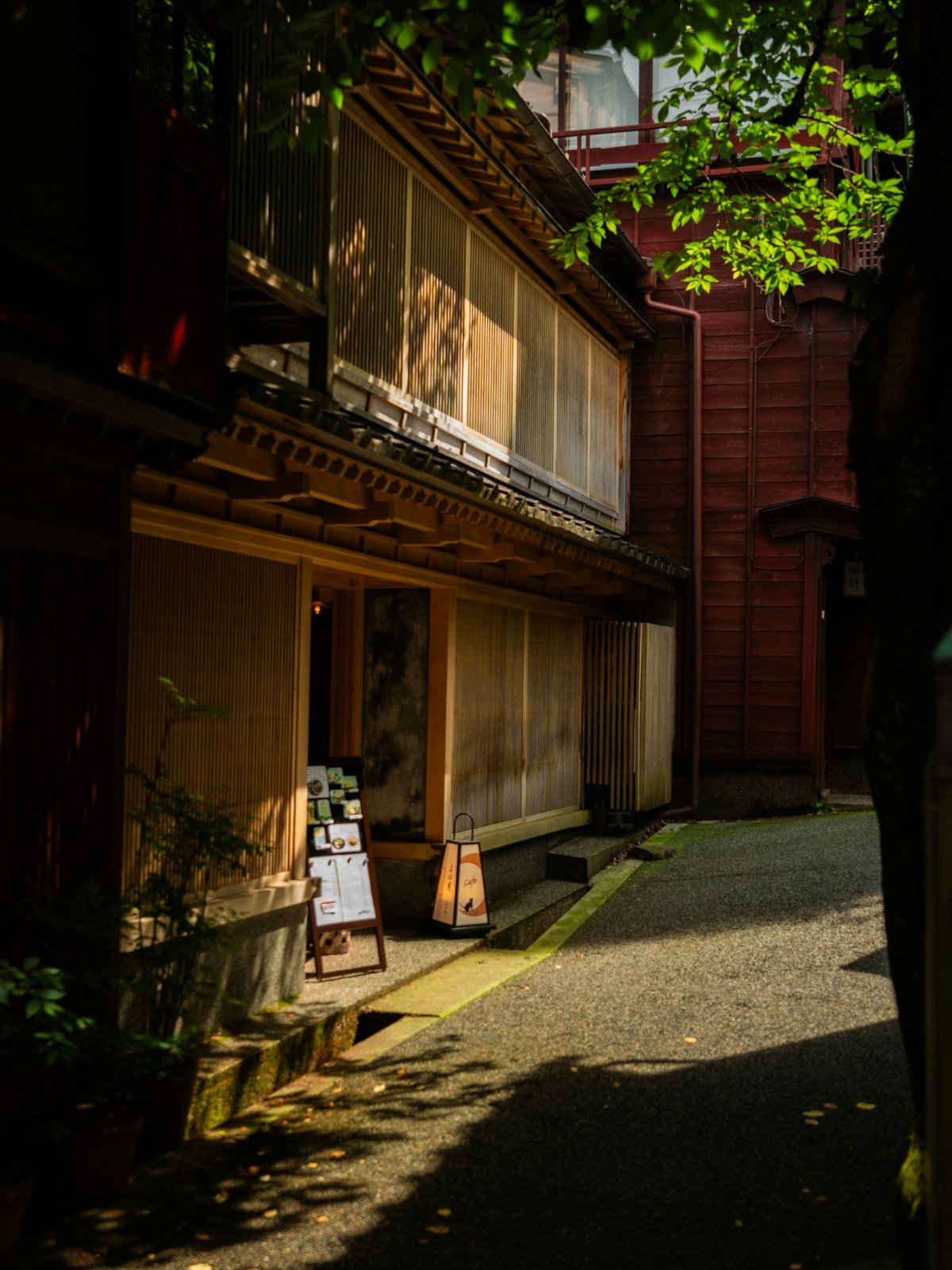
Kanazawa is Japan’s most complete historic city outside Kyoto and Nara — a place that escaped World War II bombing almost entirely, leaving samurai districts, geisha quarters, Buddhist temple areas, and one of Japan’s finest traditional gardens intact in their original form. The city has been rebuilding its reputation since the Hokuriku Shinkansen opened in 2015, and extended stays here have a genuinely different character to Japan’s larger cities: the Higashi Chaya district in the evening, the Kenroku-en in morning frost, the 21st Century Museum of Contemporary Art for contemporary contrast, the Omicho fresh market for lunch. A week covers the main attractions; a month turns Kanazawa into something more like a home.
Choosing Your Area
Kanazawa Station is the logical arrival point and practical hub. The station building itself is an architectural statement — the wooden torii-gate Drum Gate and glass dome have become symbols of modern Kanazawa. Business hotels concentrate here, and the Loop Bus network connects the station to all major sights. This area is more modern than the historic centre but is the most convenient base for those making multiple day trips.
Katamachi is Kanazawa’s main entertainment and dining district, 1.5 kilometres southeast of the station. Restaurant density is high, café culture is strong, and the nightlife area gives the neighbourhood a livelier evening character. Mid-range hotels and some guesthouses operate here.
Higashi Chaya District is the best-preserved geisha quarter in Japan outside Kyoto’s Gion. The machiya tea house buildings on the main street (Higashiyama) are open as museums and galleries by day; the surrounding streets have guesthouses and small hotels in renovated machiya buildings. Atmospheric and genuine, this is the most rewarding long-stay base for those who prioritise place over convenience.
Kenroku-en / Kanazawa Castle Area sits at the heart of the historic city. The garden, castle ruins, samurai district (Nagamachi), and the 21st Century Museum are all within a 10-minute walk. Several mid-range hotels and ryokan operate in this area.
Nishi Chaya / Teramachi is the quieter west geisha district and temple area — less visited than Higashi Chaya, with a more residential character and lower accommodation prices.
Business Hotels
Dormy Inn Kanazawa is the standout extended-stay option: natural hot spring baths, late-night noodle service, and weekly rates that make a longer stay practical from a budget perspective. Located near the station. Weekly rates from approximately ¥50,000–75,000.
Hotel Monterey Kanazawa is a well-positioned mid-range option near the station with Western and Japanese room types, reliable wifi, and a consistent standard throughout. Weekly rates from approximately ¥60,000–90,000.
APA Hotel Kanazawa Chuo offers competitive rates in the Katamachi area with compact but functional rooms. Weekly rates from approximately ¥42,000–62,000.
Search extended-stay hotels in Kanazawa on Booking.com to compare current availability and long-stay pricing.
Machiya Guesthouses and Ryokan
Kanazawa’s historic districts have a growing number of guesthouses in renovated machiya townhouses — traditional wooden buildings with earthen walls and intimate interior gardens. These properties offer a more authentic experience of the city’s architectural heritage than hotels.
Private rooms in machiya guesthouses in Higashi Chaya and Teramachi typically run ¥6,000–12,000 per night, with weekly rates negotiable for longer stays. Shared bathrooms are common at the budget end; some properties have private en-suite rooms at premium rates. Monthly rates (for stays of 30+ days) can sometimes be negotiated directly with the property owner.
Traditional ryokan in the Kenroku-en area offer Japanese-style rooms with tatami and access to onsen baths. Room-only rates (sudomari) from approximately ¥12,000–20,000 per night make these a mid-range extended-stay option at approximately ¥200,000–350,000 per month.
Browse machiya guesthouses and ryokan in Kanazawa on Booking.com to compare options by neighbourhood.
Co-Working and Remote Work
Kanazawa has invested in remote work infrastructure as part of Japan’s regional revitalisation (chiho sosei) programme. Several co-working spaces operate in the city:
Kanazawa Crossing in the Katamachi area offers hot desks and dedicated desks with strong internet connectivity. Day passes and monthly memberships are available.
Multiple cafes near the station and in Katamachi have reliable wifi suitable for several hours of focused work. The Kanazawa area’s cultural density — particularly the 21st Century Museum, the Kenroku-en garden, and the craft market — provides the lifestyle counterpart to a work day.
Practical Notes for Long Stays
- Getting around: The Loop Bus (¥200 per ride, or a day pass) covers the main tourist areas. Kanazawa is also highly cyclable — bicycle hire from the station (¥500/day from Cogent Cycles) makes getting around practical and enjoyable.
- Food culture: Kanazawa’s Omicho Market is one of Japan’s best fresh markets. The city has a refined food culture built on Japan Sea seafood (yellowtail, snow crab in season) and regional traditions from the Kaga area.
- Grocery costs: Monthly grocery costs for one person run approximately ¥30,000–45,000. The Omicho market has competitive prices on fresh fish.
- Winter: The Hokuriku coast receives heavy snowfall (typically 1–2 metres accumulated). January and February bring the most snow; hotels are heated and the city is well-prepared. The snow-covered Kenroku-en during yukitsuri (snow-umbrella season) is one of Japan’s most photographed sights.
Approximate Monthly Costs (Accommodation Only)
| Type | Monthly Rate |
|---|---|
| Machiya guesthouse (private room) | ¥120,000–200,000 |
| Budget business hotel | ¥120,000–175,000 |
| Mid-range hotel (Dormy Inn / Hotel Monterey) | ¥160,000–240,000 |
| Ryokan (room only, Kenroku-en area) | ¥200,000–350,000 |
| Monthly apartment (residential area) | ¥45,000–70,000 |
Search all accommodation types in Kanazawa on Booking.com to compare current availability and pricing.