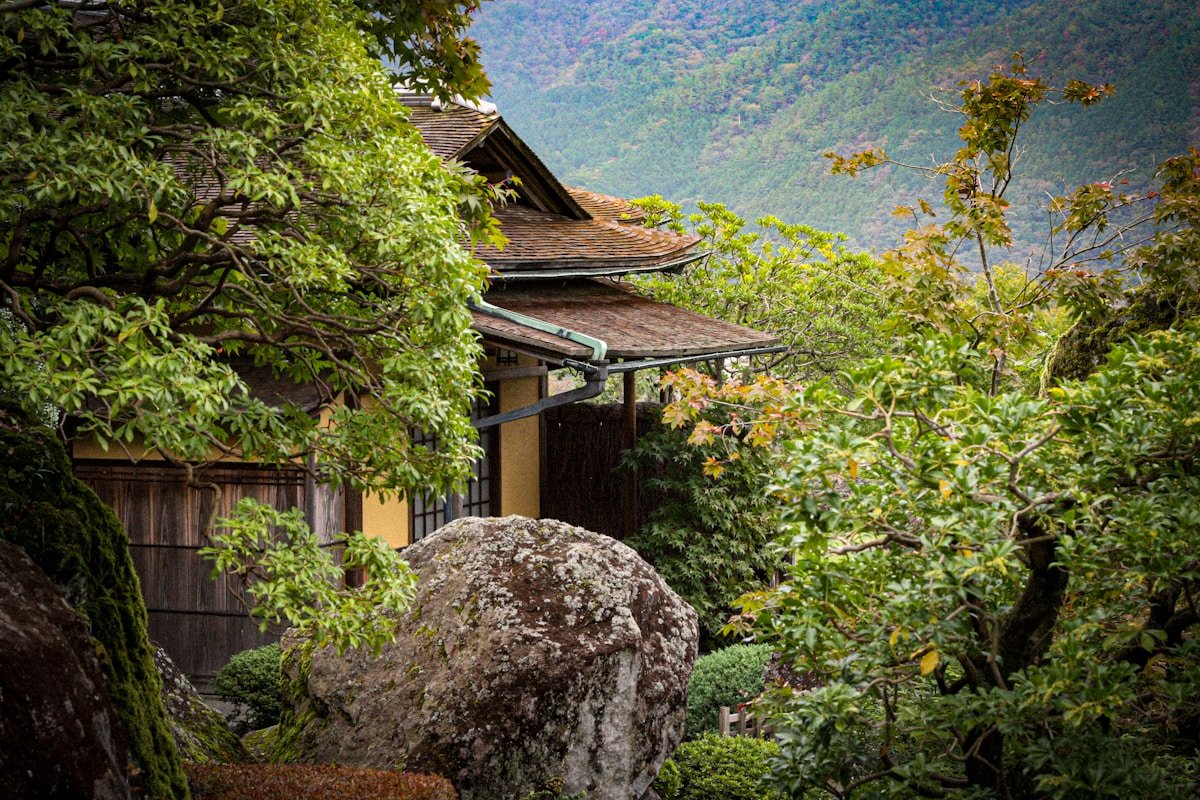
Hakone is not a city in the usual sense — it is a mountainous resort district an hour from Tokyo where the primary activity is recovering from Tokyo. Ryokan, cable cars, open-air sculpture museums, Lake Ashinoko, volcanic peaks, and on clear days a view of Mount Fuji from the lake’s edge: Hakone is built for the extended pause. Most visitors day-trip from Tokyo or stay a single night in a ryokan. Those who stay a week or more find something different: the area’s five valley districts (Yumoto, Miyanoshita, Gora, Sengokuhara, and Ashinoyu) each have their own character, and the interconnected transport network — rack railway, cable car, ropeway, lake ferry — turns longer exploration into something genuinely enjoyable.
Choosing Your Area
Hakone-Yumoto is the gateway to the region: the closest point to Odawara Station (served by the Romancecar limited express from Shinjuku in 85 minutes, or shinkansen to Odawara then local rail in 13 minutes). It is the most convenient and the most crowded, with gift shops and tourist restaurants competing for attention alongside the onsen houses. Guesthouses and budget ryokan are most concentrated here. A good base for a week but less suitable for deeper extended stays.
Miyanoshita was Hakone’s first established resort area, with Western-style hotels dating to the Meiji era alongside traditional ryokan. The Fujiya Hotel is the iconic address here — a Victorian-era grand hotel with mountain gardens. Quieter than Yumoto, with a more historical atmosphere.
Gora sits at the upper terminus of the cog railway and is the most practical base for those staying more than a few days: good transit connectivity to the rest of the park system, proximity to Hakone Open-Air Museum, a range of accommodation options, and a slightly cooler temperature in summer. The cable car to Lake Ashinoko begins here.
Sengokuhara is a plateau area known for pampas grass meadows, the Lalique Museum, and Hakone Open-Air Museum. It has a scattered residential character with some independent guesthouses and ryokan — more countryside than resort. Car hire is practically necessary here.
Lake Ashinoko (Moto-Hakone / Hakone-machi) is at the southern edge of the park, with the most direct Fuji views and the torii gate that stands partially in the lake. Accommodation here is limited but memorable.
Ryokan
Ryokan are the defining accommodation format in Hakone, ranging from simple one-floor family operations to architectural masterpieces with private open-air baths. For extended stays, room-only rates (without meals, known as sudomari) are considerably more budget-friendly.
Gora Kadan is consistently ranked among Japan’s finest ryokan: a hillside property in Gora with private rotemburo (outdoor baths) carved from volcanic stone. Rates reflect its status — expect ¥60,000–100,000 per person per night with two meals. It is a special-occasion choice rather than a long-stay base for most budgets.
Hakone Ginyu is another premium option in Kowakidani, with private hot spring baths accessible from each room, exceptional kaiseki dining, and forest views. Rates from approximately ¥50,000–80,000 per person per night with meals.
For more sustainable extended-stay budgets, mid-range ryokan in Gora and Hakone-Yumoto offer room-only rates from approximately ¥12,000–25,000 per person per night, with access to shared indoor onsen baths. A week at mid-range rates runs approximately ¥84,000–175,000 per person.
Search ryokan and onsen hotels in Hakone on Booking.com to compare current rates.
Guesthouses and Budget Options
Hakone-Yumoto has several guesthouses offering dormitory and private room options from approximately ¥3,500–6,000 per night. These are primarily oriented toward younger visitors and backpackers and typically lack the onsen facilities of ryokan, though some have shared hot spring baths on site.
For longer stays on a tighter budget, Odawara city (20 minutes from Hakone-Yumoto by local rail) offers a far wider range of business hotels and apartment options at urban prices. Many visitors doing week-long Hakone stays base in Odawara and use the rail network to move through the park.
Extended Stays: Practical Considerations
Hakone is not optimised for month-long stays in the way that a city accommodation market is. There are no dedicated serviced apartments, limited grocery options in the mountain areas (convenience stores in Yumoto and Gora; a small supermarket in Odawara), and few co-working facilities. What it offers instead is therapeutic: daily onsen access, mountain air, and an environment that makes work feel distant.
For two-week stays, a mid-range ryokan on room-only rates in Gora is the most practical approach. For a full month, a hybrid approach works well: a furnished short-term rental in Odawara for the working week, with weekends spent in Hakone itself.
Browse extended-stay options near Hakone on Booking.com for city-based alternatives with day-trip access.
Practical Notes for Long Stays
- Transport pass: The Hakone Free Pass (2 days ¥6,000, 3 days ¥6,500 from Shinjuku) covers the Odakyu Romancecar, all buses, the cog railway, cable car, ropeway, and lake ferry. For longer stays, purchase individual tickets or a Hakone Tozan line pass.
- Season considerations: Summer weekends are extremely crowded; Golden Week (late April to early May) and autumn foliage season (late October to November) see peak pricing. Fuji views are clearest in winter; autumn has the finest colour.
- Grocery access: Stock up in Odawara before heading into the mountains. Convenience stores are in Yumoto and Gora. Major supermarkets are only in Odawara.
Approximate Costs Per Week (Accommodation)
| Type | Weekly Rate (per person) |
|---|---|
| Guesthouse / hostel dorm | ¥25,000–40,000 |
| Budget ryokan (room only) | ¥60,000–100,000 |
| Mid-range ryokan (room + meals) | ¥120,000–200,000 |
| Luxury ryokan (Gora Kadan / Ginyu) | ¥350,000–700,000+ |
Search all accommodation types in Hakone on Booking.com to compare current availability.